Scams in the UK: how to spot a scam and where to report it
Fake texts from HMRC and the DVLA, a call ‘from your bank’ about a safe account, rental, job and investment scams. How to spot them, where to report them and how to get your money back through your bank (as of October 2026).
Author: AdministratorPublished: 8 min read
Contents
In short
- Fraudsters pretend to be HMRC, the DVLA, delivery companies, banks, the police and members of your family. What they have in common is time pressure and a request for money, a code or your details.
- Being asked to move money to a ‘safe account’ or to give out a one-time passcode is a classic sign of fraud. Hang up and call your bank on 159 or on the number on your card.
- Forward suspicious texts free of charge to 7726 and emails to report@phishing.gov.uk.
- If you have lost money, call your bank straight away, then report it to Report Fraud (formerly Action Fraud; tel. 0300 123 2040) in England, Wales and Northern Ireland, or to Police Scotland on 101 in Scotland.
- Victims of bank transfer fraud in the UK can get up to £85,000 back from their bank; you need to claim within 13 months (as of October 2026).
- This guide is general information, not legal or financial advice.
How to spot a scam
The Take Five to Stop Fraud campaign sums up how to protect yourself in three steps (Stop. Challenge. Protect.):
- Stop – before you hand over money or information, stop and think.
- Challenge – ask yourself whether it could be fake. You can refuse any request; only criminals try to rush you or make you panic.
- Protect – if you think you have fallen for a scam, contact your bank immediately.
Warning signs that turn up in almost every scam:
- unexpected contact (a text, call, email or message on a website or app) and pressure to act fast (‘today’, ‘within the hour’),
- a request for a one-time passcode, password or PIN,
- a request to transfer money to a new account, or to buy gift cards or cryptocurrency,
- an offer that is too good to be true, or a request to keep the matter secret,
- a link in the message rather than a suggestion that you go to the official website yourself.
The rule that protects you best: check who is contacting you using details you have found yourself (the number on your card, the official website), not the ones in the message.
Fake texts, emails and calls ‘from official bodies’

The most common messages are about a supposed tax refund, an unpaid fee, an undelivered parcel (for example with a charge for redelivery) or a blocked account. Here is what the organisations themselves say:
- HMRC does not send texts about tax rebates and does not ask for personal or payment details by text. An email about a refund or asking for your details can only come from an address ending in hmrc.gov.uk. Forward suspicious emails to phishing@hmrc.gov.uk and texts to 60599 (charged at your network rate), and report phone calls using the form on GOV.UK.
- The DVLA never asks for your bank account details or for you to confirm your payment details. Vehicle tax refunds are paid automatically, never through an email with a link. The DVLA’s official services are only on GOV.UK; other websites may charge inflated fees or be fake.
- Delivery companies and the NHS – don’t click the link in a message you weren’t expecting. Go to the official website or app yourself and check there.
Don’t reply to suspicious texts and don’t click the links. Forward the text to 7726 (free), and your mobile provider may block the sender (NCSC). Forward emails to report@phishing.gov.uk.
The ‘safe account’ and other bank transfer scams
People lose the most money when they make the transfer themselves because someone has talked them into it (authorised push payment, or APP fraud). A typical scenario: someone from your ‘bank’s security team’ or ‘the police’ calls, says your account is at risk and asks you to move your money to a ‘safe account’ or to read out a code from a text. The number on your screen may look genuine.
What to do:
- Hang up. Don’t give out any codes and don’t install any apps the caller asks you to.
- Call 159. This number connects you to your bank and, according to Stop Scams UK, cannot be spoofed. It works for customers with more than 99% of current accounts in the UK, including Barclays, HSBC, Lloyds, Monzo, Nationwide, NatWest, Revolut, Santander and Starling (full list).
- If 159 doesn’t work for your bank, call the number on the back of your card.
Take Five lists being asked to transfer money to a new or ‘safe’ account, and being asked for a one-time passcode, as typical signs of fraud.
Rental scams and fake job offers
Renting. Citizens Advice says: don’t pay any money until you have seen the property, because the listing could be a scam. Before you pay, get the full name and contact details of the landlord or letting agent, and ask for a receipt for every payment (Citizens Advice). Be wary of a ‘landlord abroad’ who wants a deposit before you view the property and promises to post you the keys.
Jobs. A recruitment agency cannot charge you a fee for finding you work or looking for work for you. It can offer extra paid services (for example help with your CV, training or transport), but it must give you the fee and terms in writing, cannot make the job conditional on you using them, and you can cancel them without penalty (5 working days’ notice, or 10 for accommodation). If an agency has wrongly charged you a fee, you can complain through Acas (GOV.UK). Modelling and entertainment agencies have separate rules.
Also be careful when a job is offered without an interview, the pay is far above the going rate and all contact happens only through a messaging app or a personal email address.
Investment, crypto and romance scams
Investments. The Financial Conduct Authority (FCA) warns about unexpected offers, pressure to decide quickly and promises of high returns. Before you pay anything in:
- check the firm on the FCA register (Firm Checker) and the FCA Warning List,
- only use contact details from the FCA register, because fraudsters create ‘clones’ of real firms,
- turn down offers to ‘recover’ money you have already lost in exchange for a fee (recovery scams),
- if in doubt, call the FCA on 0800 111 6768 (ScamSmart).
The FCA lists cryptoasset investment scams among the common types of scam.
Romance scams. Someone you met online spends weeks building a relationship, and then a sudden ‘crisis’ appears: medical treatment, a ticket, money that is stuck. Don’t send money or bank details to anyone you only know from the internet, even if the story sounds convincing. Keep the messages and report the profile to the platform.
WhatsApp: ‘Hi Mum’ and account takeover
A message from an unknown number: ‘Hi Mum, I’ve lost my phone, this is my new number’, followed shortly by a request for an urgent transfer, often to a ‘friend’s’ account. According to Which?, the fraudsters want you to act in a panic.
- Don’t reply to the message. Call your relative on the number you already have for them.
- You can agree a code word with your family in advance for emergencies.
- Never give anyone your six-digit WhatsApp verification code – a fraudster can use it to take over your account.
- Turn on two-step verification in your account settings (Account > Two-step verification) and set a six-digit PIN.
- Block and report the suspicious chat in the app (Block and report) (Which?).
Messages in Polish and Polish phone numbers
Fraudsters also write in Polish. If a fake text arrived on a Polish SIM card, you can forward it to CERT Polska on 8080. Forward the whole message in its original form, without cutting out the link. Reporting is free in Poland; abroad you pay your provider’s rate. You can report suspicious emails and websites at incydent.cert.pl or to cert@cert.pl (gov.pl). Report messages that arrived on a UK number to 7726.
How to report a scam
- Text – forward it to 7726. Email – forward it to report@phishing.gov.uk. Reporting to the NCSC is not the same as reporting a crime.
- You have lost money or someone has taken over your account – in England, Wales and Northern Ireland, report it to Report Fraud online or on 0300 123 2040 (Monday to Friday, 8am to 8pm, according to Citizens Advice). Report Fraud replaced Action Fraud on 4 December 2025; the phone number has not changed. In Scotland, call Police Scotland on 101.
- Citizens Advice suggests calling 101 if the scammer is operating in your area or you sent money within the last 24 hours, and 999 if you feel threatened.
- Also report investment, crypto, insurance and pension scams to the FCA, and fake adverts to the Advertising Standards Authority.
- Write down the scammer’s contact details, what you gave them and how you paid; your bank and the police will find this useful (Citizens Advice).
Already paid? Getting your money back through your bank
- Call your bank immediately (159 or the number on your card) and tell them it is fraud. Change your passwords if you gave them out.
- Report it to the police (Report Fraud or Police Scotland), or agree to let your bank do this for you.
- Answer your bank’s questions promptly, but first check that it really is your bank.
The reimbursement rules for APP fraud (as of October 2026, according to the Payment Systems Regulator):
- they cover UK payments made by Faster Payments or CHAPS from 7 October 2024 by individuals, micro-enterprises and charities,
- reimbursement of up to £85,000 per claim; your bank may pay more,
- claim within 13 months of the payment, but ideally straight away,
- your bank may deduct an excess of up to £100, but not for vulnerable customers,
- you should usually get your money within 5 working days; the bank can pause the clock to gather information, but must decide within 35 working days,
- you won’t be reimbursed if you were involved in the fraud or were grossly negligent; the PSR stresses that this is a high bar,
- not covered: card, cash and cheque payments (these have their own protections), transactions you did not authorise (for example use of a stolen card), civil disputes and accounts with credit unions.
Disagree with your bank’s decision? You can complain free of charge to the Financial Ombudsman Service; its compensation limit is £430,000.
Where to get help
- Your bank – 159 or the number on your card, when money is involved.
- Report Fraud – 0300 123 2040 (England, Wales, Northern Ireland); Police Scotland – 101; 999 if you are in danger.
- Citizens Advice consumer helpline – 0808 223 1133, in Welsh 0808 223 1144, Monday to Friday 9am to 5pm, free from mobiles and landlines (Citizens Advice).
- FCA – 0800 111 6768, checking investment firms.
- Take Five – advice on how to spot fraud.
- CERT Polska – texts to a Polish number: 8080, online reports: incydent.cert.pl.
Źródła
- APP fraud reimbursement protections
- Report Fraud: new service from City of London Police
- Phishing scams: how to spot and report them – Report a scam text
- Report a scam
- Contact the consumer service
- Report suspicious HMRC emails, texts, social media accounts and phone calls
- DVLA’s top tips for avoiding scams
- 159 Phone number
- Take Five to Stop Fraud
- Protect yourself from scams (ScamSmart)
- Your rights as an agency worker: Fees
- Check the costs of starting to rent from a private landlord
- How to spot a WhatsApp scam
- Coraz więcej prób wyłudzenia przez tzw. fałszywe SMS-y. Zachowaj czujność!
Photos
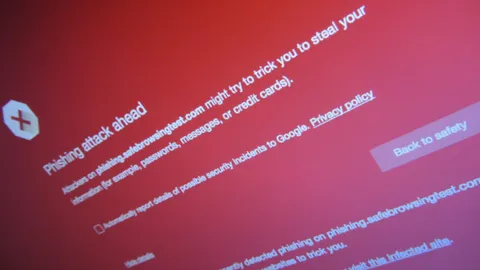
- Cover: „Phishing warning”, author: Christiaan Colen, licence CC BY-SA 2.0; cropped or resized.
- Photo 1: „150221-texting-text-smartphone-hands.jpg”, author: r. nial bradshaw, licence CC BY 2.0; cropped or resized.
- Photo 2: „Red Telephone Box”, author: Mostaque Chowdhury, licence CC BY 2.0; cropped or resized.
Tags
Share with friends