Pensions in the UK and Poland: State Pension, workplace pensions and ZUS
How much the State Pension is in 2026/27, how to check your forecast and National Insurance record, fill gaps, how workplace pensions work and how to combine years worked in the UK and Poland with ZUS.
Author: AdministratorPublished: 10 min read
This information is awaiting editorial verification
Contents
In short
- The full new State Pension is £241.30 a week (as of October 2026). To get the full amount you usually need 35 years of National Insurance contributions, and to get anything at all you need at least 10 years.
- State Pension age is currently 66, but it is rising to 67 between 2026 and 2028. You can check your exact date with the calculator on GOV.UK.
- You can check your pension forecast and NI record for free online on GOV.UK or in the HMRC app. You can usually fill gaps from the last 6 years with voluntary contributions.
- Your employer must enrol you in a workplace pension if you are aged between 22 and State Pension age and earn at least £10,000 a year. The minimum total contribution is 8%, of which your employer pays 3%.
- Years worked in Poland and the UK aren't lost: each country pays a pension for its own periods, and periods from the other country can help you meet the minimum qualifying period.
- The retirement age in Poland is 60 for women and 65 for men. So you may start getting your Polish and UK pensions at different times.
- This is general information, not financial or legal advice. For big decisions, use the free government services described below.
State Pension: how much it is and what it depends on
The new State Pension applies to men born on or after 6 April 1951 and women born on or after 6 April 1953. The full rate is £241.30 a week (as of October 2026; check the current rate on GOV.UK). That's about £12,548 a year. It goes up every year by the highest of three measures: average earnings growth, CPI inflation or 2.5%.
How much you get depends on your National Insurance record (NI record):
- 35 qualifying years give you the full amount if your NI record started after April 2016. If you were previously ‘contracted out’, you usually need more.
- 10 years is the minimum to get anything. If you have fewer years than you need for the full amount, you'll get less; your forecast will show the exact figure.
- You build up a qualifying year by working and paying NI contributions, by getting NI credits or by paying voluntary contributions.
You get National Insurance credits automatically if, for example, you're on Universal Credit, you're registered for Child Benefit for a child under 12, or you get Carer's Allowance, Jobseeker's Allowance or ESA (GOV.UK). There's more about benefits in our guide Child Benefit and Universal Credit.
The State Pension is not paid automatically; you have to claim it. You usually get a letter with an invitation code; if you're 3 months away from State Pension age and haven't had the letter, you can ask for a code online (GOV.UK). The pension is usually paid every 4 weeks. If you don't claim it on time, it is automatically deferred, and you'll get higher payments later.
State Pension age: rising to 67

According to the government timetable (DWP):
- people born between 6 April 1960 and 5 March 1961 reach State Pension age at 66 and 1 to 11 months (depending on their date of birth), between 2026 and 2028,
- people born between 6 March 1961 and 5 April 1977 reach it at 67,
- for people born later, a rise to 68 is planned, but the dates may change after the next review.
The simplest way is to enter your date of birth in the State Pension age calculator. State Pension age is the same for women and men.
How to check your forecast and National Insurance record
State Pension forecast: sign in on GOV.UK or open the HMRC app. You may need to verify your identity, usually with a passport or driving licence. If you are more than 30 days from State Pension age, you can also send form BR19 or call the Future Pension Centre: 0800 731 0175, from abroad +44 191 218 3600 (Mon–Fri 8am–6pm).
National Insurance record: on GOV.UK you can see which years you have full contributions or credits for, where the gaps are, whether paying to fill them would be worth it and how much it would cost. If you live abroad, you can order a printout of your record online or with form CA3916.
Check your record now, not just before you retire. Mistakes (such as a missing year of work) are easier to sort out while you still have your payslips and P60s. How to read them is explained in our guide Income tax in the UK.
Gaps in your record and voluntary contributions
You might have a gap for a year of low earnings, a break without benefits or time spent in Poland, for example. Voluntary contributions in the 2026/27 tax year are (HMRC):
- Class 2: £3.65 a week, for example for self-employed people with low profits,
- Class 3: £18.40 a week, or about £957 for a full year.
The key rules:
- You can usually only pay for the last 6 years, and the deadline is 5 April each year. For example, you can fill a gap for 2025/26 until 5 April 2032 (GOV.UK).
- Paying won't always increase your pension. Check your forecast before you pay. The online service shows whether a given year will make a difference.
- Since 6 April 2026 you can no longer pay voluntary Class 2 for periods abroad. To pay Class 3 from abroad, you need at least 10 years of living in the UK or 10 years of contributions; previously 3 years was enough. Transitional rules apply to applications made before 6 April 2026 (HMRC). If you're applying from abroad, use form CF83.
If you plan to move back to Poland, check your record before you leave. Your years in Poland can still help you reach the 10-year minimum (more on this below), but they won't increase the amount of your UK pension.
Workplace pensions: a pension through your employer
Your employer must automatically enrol you in a pension scheme (automatic enrolment) if you're a worker, aged between 22 and State Pension age, earn at least £10,000 a year and usually work in the UK (GOV.UK). If you don't meet these conditions, you can usually ask to join yourself, and your employer can't refuse.
The minimum total contribution is 8%: at least 3% from your employer, the rest from you, with part of it added by the government as tax relief. In most schemes contributions are based on earnings of roughly £6,240 to £50,270 a year (GOV.UK).
Opting out: you can opt out by contacting the scheme provider. If you do so within a month of being enrolled, you'll get back the money you've paid in. Your employer will re-enrol you every 3 years. Remember that if you opt out, you also lose your employer's contribution. Your rights at work are covered in our guide Employee rights in the UK.
Lost track of a pension from an old job? The free government Pension Tracing Service can help you find a scheme's contact details if you know the name of the employer or provider. Phone: 0800 731 0175 (Mon–Fri 10am–3pm), from abroad +44 191 218 7777. The service can't tell you whether you have a pension or how much it's worth; you'll need to check that with the provider.
Private pensions and SIPPs in brief
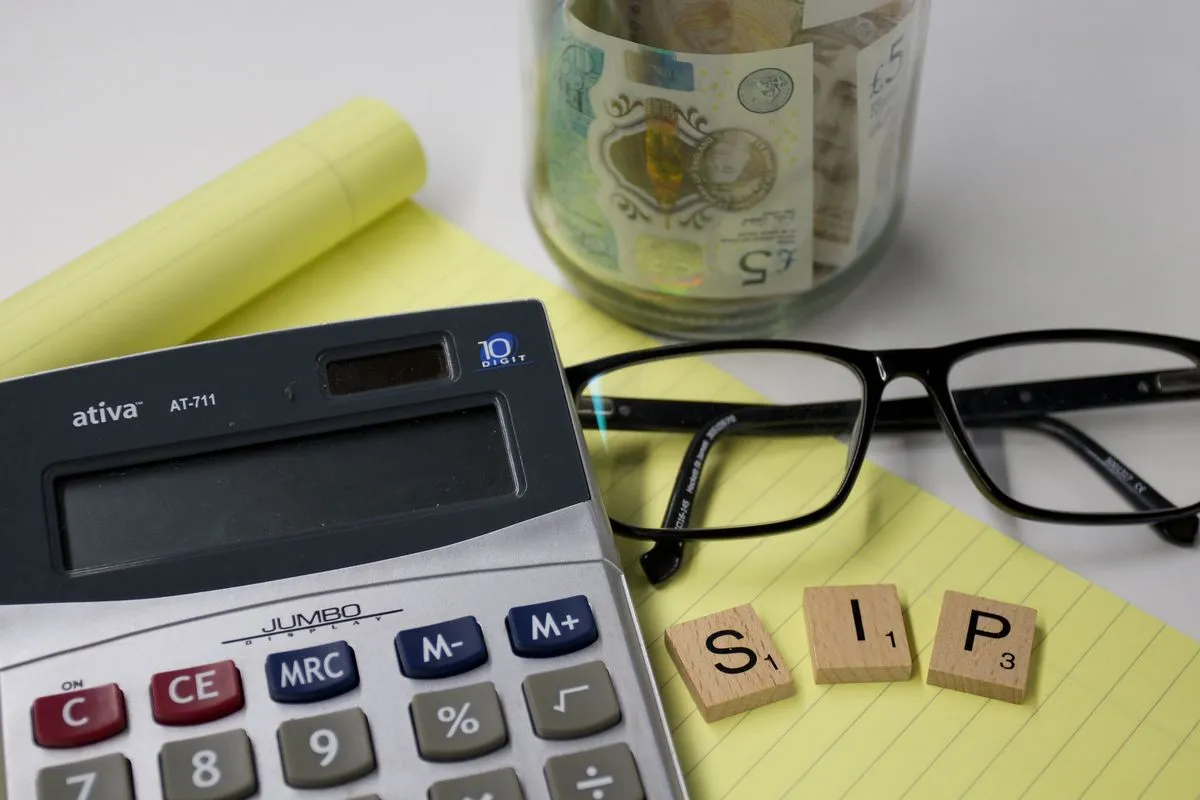
You set up a personal pension yourself, for example if you're self-employed. One type is a SIPP (self-invested personal pension), where you choose the investments yourself. Before you pay any money in, check that the provider is registered with the FCA and the scheme with HMRC, because otherwise you won't get tax relief (GOV.UK).
You can usually take money from a private or workplace pension from age 55 at the earliest (this also depends on the scheme's rules). From 6 April 2028 this age is due to rise to 57 (GOV.UK). You can usually take up to 25% of your pot tax-free, up to a maximum of £268,275 (GOV.UK).
If you're 50 or over and have a defined contribution pension, you can book a free Pension Wise appointment, run by the government's MoneyHelper service. The guidance specialist will go through your options but won't recommend a product. Pension Wise doesn't cover the State Pension or final salary and career average pensions (GOV.UK).
Working in Poland and the UK: how your periods combine
Poland and the UK coordinate pensions despite Brexit. People who were in a situation involving both countries by the end of 2020 (for example, working in the UK) are protected by the Withdrawal Agreement. Situations from 1 January 2021 onwards are covered by the protocol on social security coordination in the EU–UK Trade and Cooperation Agreement. It provides for adding together insurance periods, calculating pensions proportionally and paying them abroad (powroty.gov.pl).
In practice:
- Each country pays its own share. ZUS pays for your periods in Poland, and the DWP pays for the years on your UK NI record. You may receive two separate pensions.
- Periods from the other country help you meet the minimum. If, say, you have 7 years in the UK and a dozen or so in Poland, your Polish years can help you reach the 10 years needed for the State Pension. However, the UK amount will be calculated only from your years in the UK (GOV.UK). According to GOV.UK, these rules apply to everyone, regardless of nationality or when they moved.
- Different retirement ages. In Poland a pension is granted once you reach 60 (women) or 65 (men) and have at least 1 day of paid contributions, from the month you apply (ZUS). So you may get your Polish pension earlier than your UK one.
Where to apply? As a rule, in the country where you live:
- If you live in the UK: claim your State Pension in the UK and say that you have worked in Poland. The UK will pass your claim on to the pension institutions of the EEA countries where you worked, so you don't need to make separate claims. If you reach Polish retirement age before UK State Pension age, ask how to claim your Polish pension. The International Pension Centre helps with cases involving other countries: +44 191 218 7777 (Mon–Fri 8am–6pm) (GOV.UK).
- If you live in Poland: you can claim your UK pension through ZUS. Cases involving the UK are handled by the ZUS branch in Gdańsk, International Agreements Department. Your UK National Insurance number is enough to start the process, but keep your payslips, P60s and P45s in case there's a dispute about your periods.
ZUS helpline: 22 560 16 00 (advisers Mon–Fri 7am–6pm). From abroad, dial +48 22 560 16 00. You can check your Polish account on your eZUS profile.
State Pension if you move to Poland, and tax
Payments in Poland: you can have your UK pension paid into an account in Poland (you'll need the IBAN and BIC) or in the UK, every 4 or 13 weeks. A 0.39% fee is charged for currency conversion (GOV.UK). Because Poland is in the EEA, your State Pension goes up every year just as it does in the UK (GOV.UK).
Tax in the UK: the State Pension is taxable, but it is paid without tax deducted. If you have other income (from work or a private pension), HMRC will change your tax code to collect the tax from that. If the State Pension is your only income and it's above your tax-free allowance (Personal Allowance, usually £12,570), HMRC will send you a Simple Assessment bill (GOV.UK). The full State Pension is currently slightly lower than the Personal Allowance. Scotland has different income tax bands.
The UK–Poland double taxation convention (from 2006) states that pensions paid to someone living in one of the two countries are taxable only in the country of residence. There are exceptions, including government service pensions and lump sums from a pension scheme (the convention on GOV.UK). Before you move, confirm your tax residence with HMRC and the Polish tax authorities.
Watch out for pension scams
Pensions are a common target for fraudsters. According to the FCA, the warning signs are:
- an offer to release money from your pension before age 55 (‘pension liberation’, ‘pension loan’). This is almost certainly a scam, and it can leave you with a tax bill of up to 55% and charges of up to 30%,
- an unexpected call, text or email offering a ‘free pension review’,
- guaranteed high returns, pressure to act quickly, unusual overseas investments.
Hang up, don't give out any details and don't transfer your pension at the request of someone who contacted you out of the blue. Report pension cold calls to the ICO and suspicious firms to the FCA: 0800 111 6768. You can check firms on the FCA Warning List. Read more in our guide Scams in the UK.
Where to get help
- GOV.UK – State Pension forecast and National Insurance record, also in the HMRC app.
- Future Pension Centre: 0800 731 0175, from abroad +44 191 218 3600 – forecasts and questions about the State Pension.
- International Pension Centre: +44 191 218 7777 – pensions when you work or live abroad.
- Pension Tracing Service – tracing a lost workplace or private pension.
- MoneyHelper and Pension Wise – free, impartial information about pensions (Pension Wise for people aged 50 and over).
- ZUS: helpline 22 560 16 00 and your eZUS profile – the Polish part of your pension; cases involving the UK are handled by the ZUS branch in Gdańsk.
- In Northern Ireland the State Pension is handled through nidirect, and the claiming rules are slightly different.
Źródła
- The new State Pension: What you'll get
- State Pension age timetable
- Check your State Pension forecast
- Voluntary National Insurance: Rates
- Voluntary National Insurance: If you live or work abroad (or have previously)
- The new State Pension: If you've lived or worked abroad
- State Pension if you retire abroad: How your pension is affected
- Workplace pensions: Joining a workplace pension
- Find pension contact details
- Tax when you get a pension: How your tax is paid
- 2006 Poland-UK Double Taxation Convention — in force
- Emerytura w wieku powszechnym
- Emerytura po pracy w Wielkiej Brytanii
- Pension scams
Photos
- Cover: „Cup of Tea by a Lake”, author: Garry Knight, licence CC BY 2.0; cropped or resized.
- Photo 1: „The word pension surrounded by personal items”, author: Hilltop Finance, licence CC BY 2.0; cropped or resized.
- Photo 2: „Initials of self-invested personal pension using lettered tiles surrounded by personal items”, author: Hilltop Finance, licence CC BY 2.0; cropped or resized.
Tags
Share with friends