Your first 30 days in the UK — a checklist of things to sort out
What to sort out after arriving in the UK, and in what order: documents and immigration status, a National Insurance number, a bank account, a GP, council tax, a phone, voting and your driving licence.
Author: AdministratorPublished: 8 min read

Contents
In short
- Start with your immigration status: your right to work, to rent and to open a bank account all depend on it.
- You apply for a National Insurance number online on GOV.UK. You can start work before it arrives, as long as you can prove your right to work.
- GP: registering is free and you don't need proof of identity, address or immigration status.
- Council tax is a local tax on your home. Get in touch with the council where you now live.
Procedures differ between the parts of the UK (England, Scotland, Wales and Northern Ireland), so we point out the differences where they matter.
1. ID and immigration status
Since 1 January 2021, citizens of Poland and other EU countries no longer have freedom of movement to the UK. According to GOV.UK, since 1 July 2021 EU citizens have had to show lawful status in the UK, and a passport or national identity card on its own is not enough to prove the right to work. Status is now usually digital: eVisas have replaced physical immigration documents, and a visa sticker (vignette) in your passport remains valid until its expiry date. If you don't have access to your eVisa yet, create a UKVI account. In some cases an employer or landlord can still accept original documents, so ask which ones they take. Entering as a visitor does not give you the right to work. Visa rules change often, so check them on GOV.UK before you travel.
If you were living in the UK by the end of 2020 at the latest (or you are a family member of someone who was), what counts is your status under the EU Settlement Scheme (settled or pre-settled status). Employers and landlords usually check it using a share code (see our guide: EU Settlement Scheme — settled and pre-settled status, share code).
What to do in the first few days:
- Check that your passport or ID card is valid and keep a copy of it (for example, a photo on your phone).
- Make sure you know what status you have (a visa or EUSS) and where to find it. It is usually held online as an eVisa in your UKVI account.
- Don't pay anyone to ‘sort out your status’. Official applications are made through GOV.UK.
2. National Insurance (NI) number
Your National Insurance number is used to record your contributions and tax. You'll see it on your payslip and your P60, among other places. You get one for life, so you don't need to apply for a new one if your details change. Don't give it to people who have no reason to know it.
Who can apply. According to GOV.UK, you can apply if you live in the UK, have the right to work and are working, looking for work or have a job offer. You must be in the UK when you apply.
You may already have one. If you have a BRP or an eVisa, you may already have been given a number: it is on the back of your BRP or in your UKVI account. You don't need a number to claim benefits, apply for a student loan or apply to the EU Settlement Scheme.
How to apply:
- Go to GOV.UK and choose the online application for an NI number.
- Have ready a passport from any country, or a national identity card from an EU country, Norway, Liechtenstein or Switzerland.
- Take and upload a photo of yourself with your passport, plus photos of any other identity documents. You can use your phone, and someone else can take the photos for you.
- If you can't upload photos you can still apply, but it will take longer. You may be asked to attend an appointment or to post copies of your documents.
- After you apply, you'll get an email with your application reference number, telling you whether you need to provide more proof of identity.
GOV.UK says your number can take up to 4 weeks to arrive after your identity has been confirmed (as of October 2026, check the current figure: GOV.UK). Helpline for England, Scotland and Wales: 0800 141 2079 (Mon–Fri 8am–5pm); Northern Ireland: 0800 587 0024 (Mon–Fri 9am–4pm). Call if you have been waiting longer than 4 weeks or your address has changed.
Working before your number arrives. You can start work before your number arrives if you can prove to your employer that you have the right to work in the UK. Beware of paid middlemen offering to ‘get you an NI number’: you can apply yourself on GOV.UK.
3. Bank account
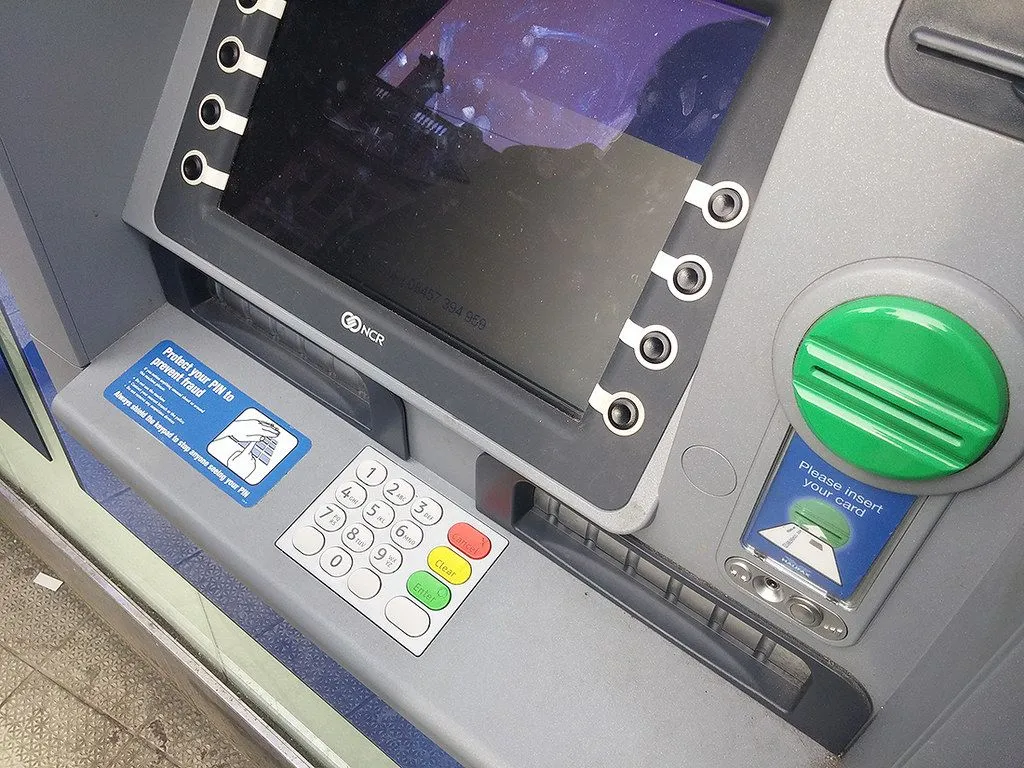
Banks usually ask for two kinds of documents: proof of identity (such as a passport) and proof of address (such as a recent bill). The documents they accept vary from bank to bank. Proving your address is often the hardest part when you've just arrived, so have your tenancy agreement, post sent to your UK address or documents from your employer to hand, and ask at the branch what they will accept.
- If you don't have the usual documents, Citizens Advice says the bank should accept a letter from a responsible person who knows you (for example, a doctor, teacher or social worker).
- A basic bank account is designed for people on low incomes or with a poor credit history, among others. It usually has no fees and needs no deposit; you can have your wages paid into it and pay by Direct Debit, but there's no chequebook or overdraft.
- A bank can refuse to open an account and doesn't always have to give a reason. People without permission to stay in the UK usually can't open one. If you run into problems, talk to an adviser (Citizens Advice).
- If you think you've been treated in a discriminatory way, you can complain to the Financial Ombudsman Service.
4. GP
Registering with a GP in England is free for everyone. According to the NHS, you don't need proof of identity, proof of address or proof of immigration status. The online form takes about 15 minutes per person, and confirmation usually arrives within 5 days. You can also register in person at the surgery (on a paper form) or through a form on the surgery's website, if it offers one. The NHS App can only be used to change surgery by people who are already registered. A surgery can turn you down if it isn't taking new patients or you live outside its area; if so, it must explain why in writing within 14 days.
The rules in Scotland, Wales and Northern Ireland are set out by their own health services (see our guide: The NHS in practice — GP, 111, 999 and the pharmacy).
5. Your address and council tax
Your address comes first: a tenancy agreement is the basis for most things (bank, GP, voting). In England, a landlord checks your right to rent, for example using a share code or your documents (see our guide: Renting a room or flat in the UK without the pitfalls). There is no such requirement in Scotland, Wales or Northern Ireland. Watch out for rental scams: don't pay a deposit or ‘holding fee’ before you've viewed the property.
Council tax is a local tax paid to the council for living in a particular home. According to GOV.UK:
- If you move to a new property or area, contact the council where you now live. The council will register you and send you a bill.
- It is usually paid by adults (18 and over) who are not in full-time education. Spouses and partners who live together are jointly responsible for the bill.
- If you live on your own as the only adult in England, you may get a 25 per cent discount. You can also apply for Council Tax Reduction if you're on a low income (information from Citizens Advice; the rules vary by council, so check with yours).
- The discount is sometimes applied automatically, but if it isn't on your bill, ask the council.
The GOV.UK page on starting to pay council tax covers England and Wales. In Scotland, the rules and valuation bands are explained elsewhere (mygov.scot or your council), and Northern Ireland has a different system: instead of council tax you pay rates, and bills are issued by Land & Property Services (details on nidirect.gov.uk).
6. Phone and SIM
The easiest way to start is with a pay as you go SIM. Pay as you go SIMs usually don't involve a contract, whereas pay monthly is a fixed-term contract for which the network may run a credit check. Compare coverage where you live, data allowances, roaming charges and early termination fees. Check with the network how long a pay as you go SIM stays active without being topped up, and top it up in line with its terms.
Don't click links in texts supposedly from HMRC, your bank or a courier, and never share your login codes.
7. Registering to vote (electoral register)
According to GOV.UK, registering takes about 5 minutes. You'll be asked for your NI number, but you can register without it. You need to register again if you change your address, name or nationality.
Who can register:
- England and Northern Ireland (from age 16): among others, citizens of Poland, Denmark, Luxembourg, Portugal and Spain, if they have permission to stay (or don't need it). Other EU citizens must have had permission to stay ‘on or before 31 December 2020’ continuously since that date.
- Scotland and Wales (from age 14): people who have permission to stay or don't need it.
Which elections you can vote in depends on your nationality and the part of the UK you live in, so check on the Electoral Commission website or with your local council.
8. Driving licence
If you have a driving licence from Poland or another EU country, according to GOV.UK:
- in Great Britain (England, Scotland and Wales) you can drive on a valid full EU licence until you are 70;
- if you are 67 or over when you become resident in the UK, you can drive for 3 years, after which you need to exchange it, without retaking a test;
- the exchange fee is £43 (as of October 2026, check the current figure: GOV.UK), and you can pick up a D1 form from a Post Office that offers DVLA services.
Northern Ireland has its own rules — check nidirect.gov.uk. With a licence from outside the EU, you can usually drive in Great Britain for 12 months after arriving; after that you need to exchange your licence (for some countries) or pass a British driving test. Use the GOV.UK ‘Exchange a non-GB driving licence’ tool.
Your 30-day checklist
- Check your immigration status and documents (days 1–3).
- Apply for an NI number if you don't have one yet (days 1–7).
- Register with a GP (first week).
- Get a SIM or a monthly contract (first week).
- Open a bank account (first 2 weeks).
- Register for council tax (once you've moved in).
- Join the electoral register (by the end of the month).
- Exchange your driving licence or check the rules (by the end of the month).
Where to get help
- Citizens Advice — free, impartial help with everyday matters (bank accounts, housing, council tax): citizensadvice.org.uk.
- GOV.UK and the NHS — NI numbers, immigration status, driving licences, registering with a GP: gov.uk, nhs.uk.
- Your council — council tax, discounts, registering to vote.
- Don't reply to messages asking for your details or a payment ‘for the government’.
Sources
Information verified:
- Apply for a National Insurance number: How to apply
- Apply for a National Insurance number
- Getting a bank account
- How to register with a GP surgery
- Start paying Council Tax
- Check if you can pay less council tax
- Register to vote
- Exchange a non-GB driving licence (licencja z kraju UE/EOG)
- Prove your right to work: EU, EEA and Swiss citizens
- Get access to your eVisa
- Right to work checks: an employer's guide
- Sign up for rates (Northern Ireland)
Photos
- Cover: „Victoria Coach Station”, author: Matt From London, licence CC BY 2.0; cropped or resized.
- Photo 1: „Cash Machine in Manchester, UK”, author: dumbfunded, licence CC BY-SA 2.0; cropped or resized.
- Photo 2: „Cleethorpes Council House”, author: D H Wright, licence CC BY 2.0; cropped or resized.
Tags
Share with friends