Renting a room or flat in the UK without the pitfalls
How to look for a place to rent, spot a scam, pass Right to Rent, understand your tenancy after the May 2026 changes and get your deposit back. Mainly covers England; Scotland, Wales and Northern Ireland have their own rules.
Author: AdministratorPublished: 8 min read

Contents
In short
- This guide covers the rules in England. The law is different in Scotland, Wales and Northern Ireland (see the last section).
- Don't pay anything before you've viewed the property, and don't trust a ‘landlord abroad’ who offers to post you the keys.
- Since 1 May 2026 there are no more Section 21 ‘no fault’ evictions in England, and most tenancies are periodic (with no fixed end date).
- Your deposit must be put in a government-backed protection scheme within 30 days, and most fees other than rent, the deposit and a narrow list of exceptions are banned.
- A lodger in someone else's home has far fewer rights than a tenant renting a whole flat.
Where to look and how to spot a scam
You'll find listings on property websites, through letting agents, in social media groups and through people you know. Whatever the listing, the same precautions apply:
- Citizens Advice's advice: don't pay any money until you've seen the property. Before you pay, get the full name and contact details of the landlord or agent, and a receipt.
- Warning signs: a price well below the going rate, ‘the owner is abroad’, refusing to meet or show you the property, pressure to decide quickly (‘lots of people are interested’), and requests for a bank transfer, cryptocurrency or gift cards.
- Since 1 May 2026, landlords and agents can't encourage offers above the advertised rent. If someone asks you to, report it to your council.
- A video tour is not the same as a visit in person: it won't show you damp, noise or the state of the wiring and plumbing.
You can report a suspected scam through Citizens Advice or Report Fraud (formerly Action Fraud; tel. 0300 123 2040).
Viewings and questions to ask
At the viewing, ask about:
- The type of tenancy, and whether the agreement will be in writing and signed by everyone before you pay any rent.
- How much the rent and deposit are, and which scheme the deposit will go into (the scheme's name).
- Which bills are included and which you pay yourself (electricity, gas, water, broadband, council tax).
- A current gas safety record and the electrical installation inspection report.
- Who manages the property and how to report repairs.
- Whether the property is for one person or shared (who else lives there and on what kind of agreement).
Take photos of the condition of the property and report any defects in writing. They'll come in handy when you want your deposit back.
Right to Rent and share codes
In England, a landlord must check that you have the right to rent. British and Irish citizens show a passport or other accepted documents. Everyone else proves their right to rent with a share code generated in their UKVI account or, if they don't have an eVisa, with original immigration documents. People with an eVisa must use a share code. A landlord can't refuse you just because you provide a qualifying document instead of a share code. Details: Prove your right to rent.
Right to Rent doesn't apply in Scotland, Wales or Northern Ireland. In England, the duty to check a lodger falls on the person taking them into their home.
Tenancies in England after the 2026 changes
The Renters' Rights Act received Royal Assent on 27 October 2025. From 1 May 2026 (source: GOV.UK):
- Section 21 (‘no fault’ evictions) has been abolished. A landlord can end a tenancy only on a valid legal ground (such as selling, moving in, or rent arrears).
- Fixed-term assured shorthold tenancies have been replaced by assured periodic tenancies. The tenancy continues until one side ends it.
- You end the tenancy by giving two months' notice in writing, unless your landlord agrees to less (the agreement can set a shorter period, but not one longer than 2 months).
- Rent can be put up once a year, with at least two months' notice; you can challenge an increase at the First-tier Tribunal.
- Listings must state the rent, and rental bidding is banned.
- Rent can only be taken once everyone has signed the agreement, and between signing and the start of the tenancy the landlord can't ask for more than one month's rent (for weekly rent: 28 days). Before signing, the only payments allowed are a holding deposit (up to 1 week's rent) and the security deposit.
- Discrimination against people with children or on benefits is banned. You can also ask in writing for permission to keep a pet.
The landlord register launches region by region from 15 December 2026 (West Midlands first); landlords pay £65 a year per property. As of October 2026, GOV.UK had not given implementation dates for the ombudsman, Awaab's Law or the Decent Homes Standard in the private rented sector; the consultation on Awaab's Law in private renting closes on 18 December 2026.
Lodger or tenant
A tenant rents a self-contained home and the landlord doesn't live with them. A lodger lives in the owner's home and shares the kitchen, bathroom or living room with them. According to GOV.UK:
- If you share living space with the owner or their family, you're usually an ‘excluded occupier’. The owner doesn't need a court order to make you leave, but must give ‘reasonable notice’ (usually the length of the rental period, for example a month if you pay rent monthly).
- If you live in the owner's home but don't share living space with them, you have basic protection and a court order is needed to evict you.
- If you rent a whole flat from a landlord who doesn't live there, you have fuller rights.
Before you move into a room, agree in writing what kind of arrangement it is and ask about notice. Citizens Advice can help if you're unsure.
Deposits, holding deposits and fees
Deposit (as of October 2026; check the current figures: Tenant Fees Act – guidance for tenants):
- a maximum of 5 weeks' rent if the annual rent is less than £50,000; 6 weeks if the annual rent is £50,000 or more (if the rent is over £100,000 a year, the tenancy is no longer covered by these rules),
- the landlord or agent must put it in a government-backed scheme (Deposit Protection Service, MyDeposits or Tenancy Deposit Scheme) within 30 days of receiving it,
- a deposit paid by someone else (such as a parent) must be protected too.
Holding deposit (to reserve the property): a maximum of 1 week's rent, binding for 15 days by default. You can lose it if you give false information, change your mind, don't respond to the landlord's requests or fail the Right to Rent check. The landlord must explain in writing why they're keeping it within 7 days.
Fees ban (Tenant Fees Act, England). Apart from rent, the permitted payments include: the deposit and holding deposit, bills set out in the agreement, a charge for replacing lost keys, interest on rent that's at least 2 weeks late (at most 3% above the Bank of England base rate), a fee for changing the agreement at your request (usually up to £50) and a fee for ending the tenancy early. Beyond this list, landlords and agents can't charge you anything (for example, for reference checks or drawing up the agreement), and compulsory loans, insurance and service contracts are expressly banned. Paid an illegal fee? Ask for it back, keep the correspondence and report it to your council.
Bills and council tax
Check in your agreement what's included in the rent. A landlord can only charge you for utility bills if the agreement says so.
Council tax is usually paid by the adults living in a property; the full bill assumes at least two adults. If you live alone, or everyone else is ‘disregarded’ (for example, full-time students), you get a 25% discount (single person discount). You apply to the council, and you must tell them if the number of people living there changes, as a discount you're not entitled to can be withdrawn, and failing to report it can lead to a penalty. In a shared house, ask the council and the landlord who pays council tax and on what basis before you sign. Details: Council Tax – who has to pay.
Condition, repairs and safety
Your landlord is responsible for the structure and exterior of the building, heating and hot water, sanitation, gas appliances and the electrical installation. Whenever something goes wrong:
- Report it straight away, ideally in writing (by email), and keep a copy.
- Don't stop paying rent while you wait for the repair.
- If nothing happens, report it to your council's environmental health or housing department.
Safety (source: GOV.UK):
- Gas appliances must be checked every year by a Gas Safe registered engineer, and you must be given a copy of the record before you move in or within 28 days of the check.
- A smoke alarm is required on every storey used as living accommodation, and a carbon monoxide alarm in every room used as living accommodation that has a fixed combustion appliance (such as a gas or oil boiler, or a wood or coal burner; gas cookers are not included). Details: guide to smoke and carbon monoxide alarms.
- The electrical installation must be safe; the inspection (EICR) every 5 years is explained in the government guide.
- Your landlord must give you at least 24 hours' notice before a visit, except in an emergency.
Moving out and getting your deposit back
- Give notice in writing two months in advance (unless you agree a shorter period). The notice period must end on a rent day or the day before.
- Pay any outstanding rent and bills, photograph the condition of the property, hand back the keys and photograph the meters.
- Ask for your deposit back. The landlord must return it within 10 days of you agreeing how much you'll get back.
- If there's a dispute, the deposit stays in the scheme, and you contact the scheme that protects your deposit about it.
The landlord can keep part of the deposit to cover unpaid rent, bills or repairs.
Scotland, Wales and Northern Ireland
These are not the English rules: Scotland has the private residential tenancy (an open-ended tenancy, with the deposit held in a scheme), Wales has occupation contracts under the Renting Homes (Wales) Act, and Northern Ireland has its own deposit scheme and landlord register. Right to Rent doesn't apply there. Check:
- Scotland: mygov.scot – rented housing and gov.scot – private renting,
- Wales: gov.wales – Renting Homes,
- Northern Ireland: nidirect – renting a home privately.
Where to get help
- Citizens Advice – free advice on renting, fees and evictions.
- Shelter England – advice for tenants and people at risk of homelessness.
- Your local council (find your council) – repairs, illegal fees, help if you're at risk of homelessness.
- Problems with a letting agent: The Property Ombudsman or Property Redress; every agent must belong to one of these schemes (The Property Ombudsman or Property Redress).
This guide is general information and is not a substitute for legal advice. The law in this area changes quickly, so check the latest guidance on GOV.UK before making any decisions.
Sources
Information verified:
- Private renting is changing (Renters' Rights Act – informacje dla najemców)
- Private renting: Tenancy types
- Tenancy deposit protection
- Tenant Fees Act 2019: guidance for tenants
- Prove your right to rent in England
- Private renting: Your landlord's safety responsibilities
- Private renting: Repairs
- Rent a room in your home: Your lodger's tenancy type
- Check the costs of starting to rent from a private landlord
- Council Tax: who has to pay
- Rent in advance and deposits (assured periodic tenancies)
- Rental bidding (assured periodic tenancies)
- How to end your tenancy (assured periodic tenancies)
- Get ready to register as a landlord (Renting is changing)
- Smoke and carbon monoxide alarms: explanatory booklet for landlords
- Electrical safety standards in the private and social rented sectors: guidance
- Report Fraud: new service from City of London Police
Photos
- Cover: „Typical Oxford: classical English terrace houses and old cars”, author: Alexander Kachkaev, licence CC BY 2.0; cropped or resized.
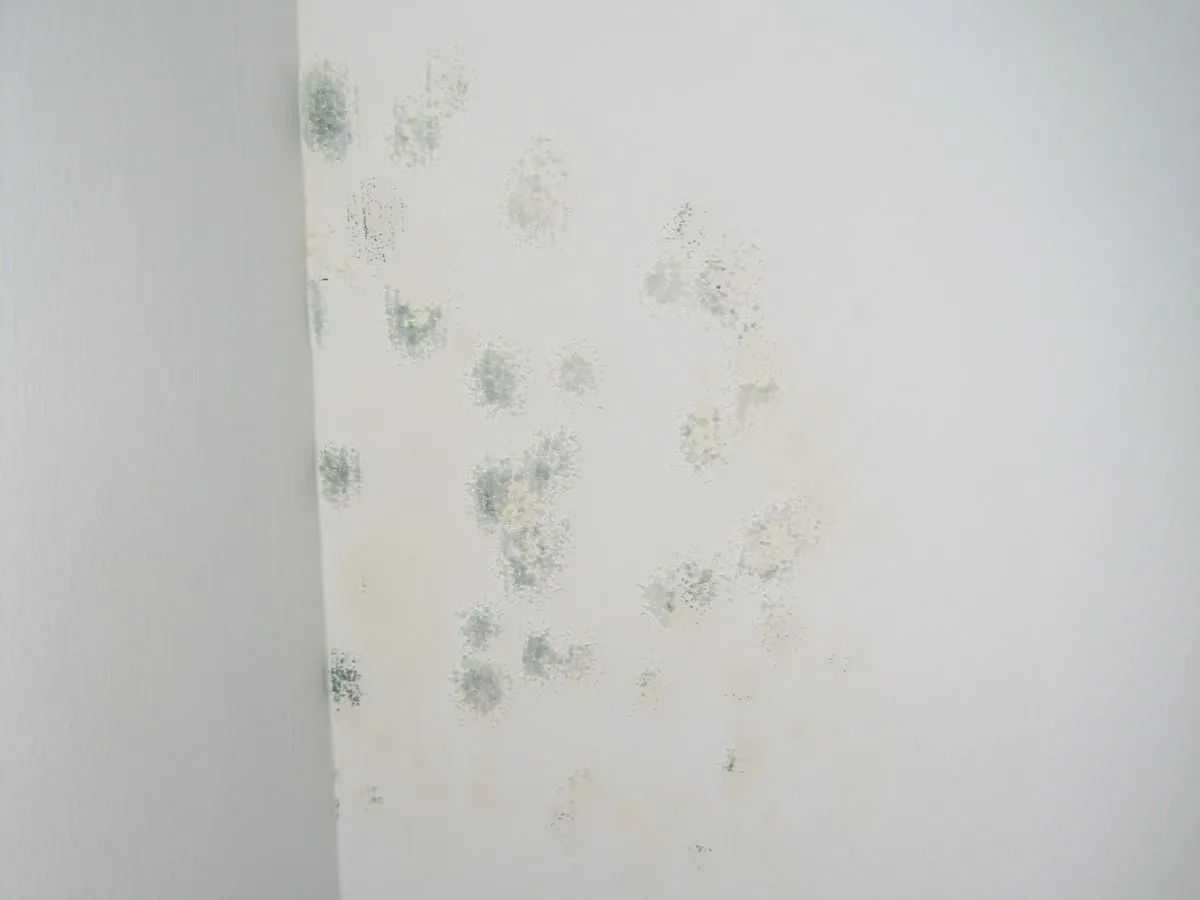
- Photo 1: „Damp and mould”, author: Bryn Pinzgauer, licence CC BY 2.0; cropped or resized.
- Photo 2: „Keys”, author: Richard-G, licence CC BY 2.0; cropped or resized.
Tags
Share with friends