Buying a house in the UK step by step: offer, conveyancing and stamp duty
Buying a house in the UK: offer, solicitor, searches, exchange and completion; in England and Wales it takes about 5 months on average. Stamp duty, first-time buyer relief, LBTT, LTT and shared ownership. As of November 2026.
Author: AdministratorPublished: 9 min read

Contents
In short
- Buying a house in the UK in England and Wales goes in this order: offer, solicitor or conveyancer, searches and valuation, exchange of contracts, completion and registration. According to GOV.UK (as of November 2026) it takes about 5 months on average, longer in a chain.
- An offer is not legally binding until contracts are exchanged; after exchange the purchase is binding.
- Stamp duty (SDLT) in England and Northern Ireland: according to GOV.UK (as of November 2026) the threshold for residential properties is £125,000, and for first-time buyers it is £300,000 (for a price of up to £500,000).
- If buying means you will own more than one residential property, 5% is usually added on top of SDLT rates.
- The sources we use give no amounts for conveyancer fees, surveys or searches: ask the conveyancer for a quote.
Buying a house in the UK step by step (England and Wales)
The GOV.UK “Buying a home” guide covers England and Wales; Scotland and Northern Ireland have different rules (below). Buying takes about 5 months on average (as of November 2026), longer in a chain.
- Funding. We cover mortgages in our guide to banking and your credit history, and saving for a deposit in our guide to ISAs.
- The property. The seller must have a valid Energy Performance Certificate (EPC). Freehold: you own the house and the land, you do not pay ground rent or maintenance fees, but you are responsible for maintaining the property. A leasehold means owning only for the period set out in the lease; most flats are leasehold, so check the number of years left on the lease.
- The offer. You usually make it through an estate agent. An offer “subject to contract” means the price can still be negotiated.
- The legal professional. The legal work is done by a solicitor, licensed conveyancer, chartered legal executive or CILEX practitioner.
- Searches, valuation and survey. Once your offer is accepted, your legal professional orders searches (including local authority and water and drainage searches); you usually pay for them up front. Your lender values the property before approving the mortgage. You can have a homebuyer survey to check its condition.
- Contract and exchange. The seller draws up the contract, which includes, among other things, when the sale will complete. When both sides are happy, they sign final copies and send them to each other. From that moment the purchase is legally binding. Fraudsters sometimes pretend to be conveyancers when deposits are due (see scams in the UK).
- Completion. Your legal professional transfers your money to the seller, and you get the keys from the seller or estate agent. You now own the property.
- Tax and registration. In England, send the SDLT return and pay the tax to HMRC within 14 days of completion (GOV.UK, as of November 2026). In Wales, send the LTT return and pay the tax to the Welsh Revenue Authority (WRA) within 30 days of the day after completion (gov.wales, as of November 2026). Your legal professional may apply to register the property with HM Land Registry as part of the purchase. Once you have moved in, deal with council tax and household bills.
How much is stamp duty in England and Northern Ireland
In England and Northern Ireland you pay Stamp Duty Land Tax (SDLT) if you buy a property or land over a certain price (GOV.UK). SDLT on residential property is charged on increasing portions of the price. The rates (as of November 2026, GOV.UK) apply if, after buying, the property is the only residential property you own:
| Portion of the price | SDLT rate |
|---|---|
| up to £125,000 | 0% |
| £125,001 to £250,000 | 2% |
| £250,001 to £925,000 | 5% |
| £925,001 to £1.5 million | 10% |
| above £1.5 million | 12% |
Non-UK residents. A non-UK resident for SDLT purposes (someone who was not present in the UK for at least 183 days during the 12 months before the purchase) usually pays a 2% surcharge when buying a residential property in England or Northern Ireland, including a first home, on top of any other SDLT rates that apply to them (as of November 2026, GOV.UK).
A solicitor, agent or conveyancer usually files the return for you and adds the tax to their bill; without one, an individual buyer completes a paper return. You can work out the amount with the HMRC calculator.
First-time buyer relief and the surcharge on additional properties
First-time buyer relief (England and Northern Ireland). It applies if the property you buy is your first home and you and anyone else you are buying with are first-time buyers. According to GOV.UK (as of November 2026) you then pay no SDLT up to £300,000, and 5% on the portion from £300,001 to £500,000. Above £500,000 there is no relief. A non-UK resident pays the 2% surcharge on a first home too (see above). Under the HMRC definition, a first-time buyer must not previously have acquired, alone or with others, an interest in a dwelling; a property anywhere in the world counts, regardless of its value, including one acquired by inheritance or gift. This restriction does not cover a previous grant or assignment of a lease with less than 21 years left to run at the time of acquisition. All the buyers must intend to occupy the property as their only or main residence.
Surcharge on an additional property. If buying means you will own more than one residential property, 5% is usually added on top of SDLT rates (as of November 2026, GOV.UK). Exceptions are also set out in the GOV.UK guidance. The higher rates apply to a price of £40,000 or more where it will not be the only residential property worth £40,000 or more that you own or part own anywhere in the world. The rules also cover anyone you are married to and anyone you are buying with. You will not pay the extra 5% if both of the following apply: the property you are buying replaces your main residence, and your previous main residence was sold within the 36 months before completion of the new purchase, including on completion day. If your previous main residence is not sold on the day you complete, you pay the higher rates; if you sell it within 3 years of buying the new home, you can apply for a refund of the higher-rate part of the tax.
Costs of buying: conveyancing, searches, survey and the Land Registry fee
The sources we use give no amounts for a conveyancer’s work, a survey or searches: ask the conveyancer what they will charge before you choose them.
The HM Land Registry fee (England and Wales) depends on the price. The table (as of November 2026, GOV.UK) covers a transfer for money of the whole of an existing registered title. For a new lease, a transfer of part or a voluntary first registration, check the applicable fee using the Land Registry calculator.
| Purchase price | Postal application | Portal application |
|---|---|---|
| £100,001 to £200,000 | £230 | £100 |
| £200,001 to £500,000 | £330 | £150 |
| £500,001 to £1 million | £655 | £295 |
Shared ownership, First Homes and Your First Home
Shared ownership (the rules below are for England). You buy a share of the home and pay rent to a landlord on the rest. According to GOV.UK (as of November 2026) the share is usually between 25% and 75%, or 10% on some homes; the deposit is usually 5% to 10% of the share you are buying. Two conditions must both be true: household income of £80,000 a year or less (£90,000 in London), and you cannot afford all of the deposit and mortgage payments for a home that meets your needs. You must also be a first-time buyer or meet another condition. For Northern Ireland, Scotland and Wales, GOV.UK points to separate pages on shared ownership.
First Homes (England only). According to GOV.UK (as of November 2026) a first-time buyer may be able to buy a home for 30% to 50% less than its market value; it must be their only or main residence. You must be able to get a mortgage for at least half the price. The income limit is £80,000 before tax in the previous tax year, or £90,000 in London. If you are buying together, the limit applies to all buyers’ combined income. Unlike shared ownership, there is no rent to pay, and SDLT is based on the price after the discount.
Your First Home (announced scheme, England). This is a new scheme to help first-time buyers purchase a new-build home. According to GOV.UK (as of November 2026) it needs a deposit of at least 2.5% of the price and gives a government equity loan of 20% of the price, interest free for 5 years. Total household income must be £110,000 or less outside London, or £140,000 or less within London. Applications are not open yet: they are expected to open in February 2027, and Budget 2026 announces pre-registration by the end of December 2026 and the first loans from April 2027; check the scheme’s current page.
Scotland, Wales and Northern Ireland
Scotland. According to mygov.scot most homes are sold through a “blind bidding” system. The seller or selling agent must normally provide a Home Report within 9 days of your request (as of November 2026). Exceptions include new homes sold off-plan or to their first occupier; the source also explains when a seller may refuse to provide the report. Your solicitor sends your offer as a letter; the sides exchange negotiating letters (missives), and once they are concluded you have a binding contract.
- LBTT (Land and Buildings Transaction Tax) is charged on increasing portions of the price. Revenue Scotland gives rates in force from 1 April 2021 (the table on the page in November 2026): 0% up to £145,000, 2% up to £250,000, 5% up to £325,000, 10% up to £750,000 and 12% above £750,000.
- First-time buyer relief raises the LBTT nil rate band to £175,000 and reduces the tax by up to £600.
- The LBTT return and payment are due within 30 days of the day after the effective date (as of November 2026, Revenue Scotland).
- ADS (Additional Dwelling Supplement), an extra charge when you buy an additional residential property, is from 5 December 2024 8% of the purchase price (as of November 2026).
Wales. Land Transaction Tax (LTT) replaced SDLT in Wales from 1 April 2018. The WRA’s main residential rates (WRA, as of November 2026) for transactions from 10 October 2022 are: 0% up to and including £225,000, 6% on the portion up to £400,000, 7.5% up to £750,000, 10% up to £1,500,000 and 12% above. If you already own another residential property, higher LTT rates may apply; check the WRA guidance. There is no first-time buyers’ relief in Wales.
Northern Ireland. According to nidirect (as of November 2026) buying a home usually takes around two to three months, and at exchange you will usually need to pay a deposit of at least 5% of the house price. After buying you must tell Land & Property Services immediately; they will issue a rate bill.
Frequently asked questions
Does a property abroad affect stamp duty?
It can. For first-time buyer relief, HMRC counts previous acquisitions of property anywhere in the world, regardless of its value, except a lease with less than 21 years left to run at the time of acquisition. The higher rates also cover owning a residential property worth £40,000 or more anywhere in the world (as of November 2026, GOV.UK). To see how this works in your case, use the HMRC calculator and ask your conveyancer.
How much does conveyancing cost?
The sources we use give no amounts. The conveyancer gives you a quote, so ask before you instruct them.
Can I pull out after exchange of contracts?
Usually not. Until contracts are exchanged an offer is not legally binding, but after exchange neither side can usually pull out without paying compensation (GOV.UK, as of November 2026). In Scotland the binding contract comes once the missives are concluded (mygov.scot).
Where to get help
- MoneyHelper: free, impartial advice about money, buying a home and taking out a mortgage, tel. 0800 138 7777 (GOV.UK, as of November 2026).
- Homes England: free advice on shared ownership in England (excluding London), tel. 0300 1234 500, Monday to Friday, 9am to 5pm; closed on Saturdays, Sundays and bank holidays (GOV.UK, as of November 2026).
- Complaints: in England and Wales, after following the firm’s complaints procedure, you can complain about a solicitor or conveyancer to the Legal Ombudsman. Complaints about an estate agent go to The Property Ombudsman or the Property Redress Scheme. The ombudsman investigates the complaint for free (GOV.UK).
- Scotland, Wales and Northern Ireland: mygov.scot, gov.wales, nidirect.
Sources
- Buying a home
- Stamp Duty Land Tax
- Stamp Duty Land Tax: Residential property rates
- Higher rates of Stamp Duty Land Tax
- SDLTM29845 - Definition of a first-time buyer
- File your Stamp Duty Land Tax return
- Registering land or property with HM Land Registry
- HM Land Registry: Registration Services fees
- Affordable home ownership schemes
- Shared ownership homes: buying, improving and selling
- First Homes scheme: first-time buyer's guide
- Your First Home
- Budget 2026 (HTML)
- Residential property (LBTT)
- The Additional Dwelling Supplement (ADS)
- Buying a home: the legal process
- Land Transaction Tax rates and bands
- Higher rates of Land Transaction Tax
- Land Transaction Tax: overview
- Buying a home - step-by-step guide
Photos
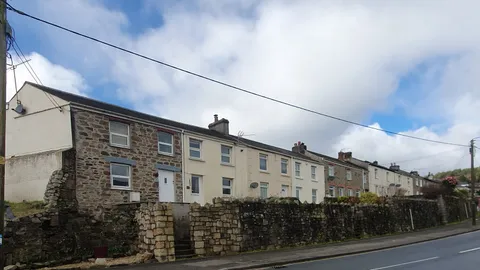
- Cover: „Rooftops of Glanmor Terrace from High Terrace, New Quay, Ceredigion - geograph.org.uk - 6931940”, author: Ruth Sharville, licence CC BY-SA 2.0; cropped or resized.
Tags
Share with friends