Orchids at home: how to water, repot and get them to flower again
The supermarket favourite, the moth orchid, is easy to keep in a centrally heated UK home. Light, temperature, watering, feeding, repotting, cutting back the flower spike and common problems, based on RHS advice. As of October 2026.
Author: AdministratorPublished: 6 min read
Contents
In short
- This guide covers the moth orchid (Phalaenopsis): the orchid sold in almost every supermarket, garden centre and DIY store in the UK.
- Light: bright, but out of strong summer sun. An east- or west-facing windowsill is ideal.
- Temperature: 19–30°C by day, 16–19°C at night, and no lower than 16°C. Keep it away from radiators and draughts.
- Watering: roughly once a week in the growing season, a little less in winter. Use tepid water, ideally rainwater. The roots should never dry out completely or sit in water.
- Compost: bark-based orchid compost only. Ordinary multipurpose compost will kill a moth orchid.
- After flowering: cut the spike back to just above the second node below the faded flowers. If a healthy plant hasn't flowered for a long time, move it somewhere about 5°C cooler for a month.
Choosing an orchid in the shop
Pick a plant with large, firm, healthy leaves rather than a wilted one. Moth orchid buds drop if the plant gets cold, and it is especially sensitive to cold draughts. The RHS therefore advises against buying orchids from outdoor market stalls or supermarket entrances in cold weather, where the doors are constantly opening. Keep the plant protected from the cold on the way home.
Orchids are usually sold in a clear plastic pot set inside a decorative outer pot. Keep the clear pot: you can see the roots through it, which makes it easy to tell when the plant needs water.
Where to put your orchid
- In winter a moth orchid needs plenty of light, because that is what makes it flower. Put it on an east- or west-facing windowsill. In a dark home, a plant grow light can help.
- In summer keep it out of direct sun, which scorches the leaves. A south-facing window is usually too harsh in summer.
- Temperature: 19–30°C by day, 16–19°C at night, minimum 16°C. A home that is comfortable for you usually suits the orchid too, as it grows well in centrally heated rooms.
- Don't put it above a radiator, next to a heater or in a draught, for example by a window or patio door that is often opened. In winter, watch out for a windowsill behind a curtain: at night it can be much colder there than in the room.
How to water
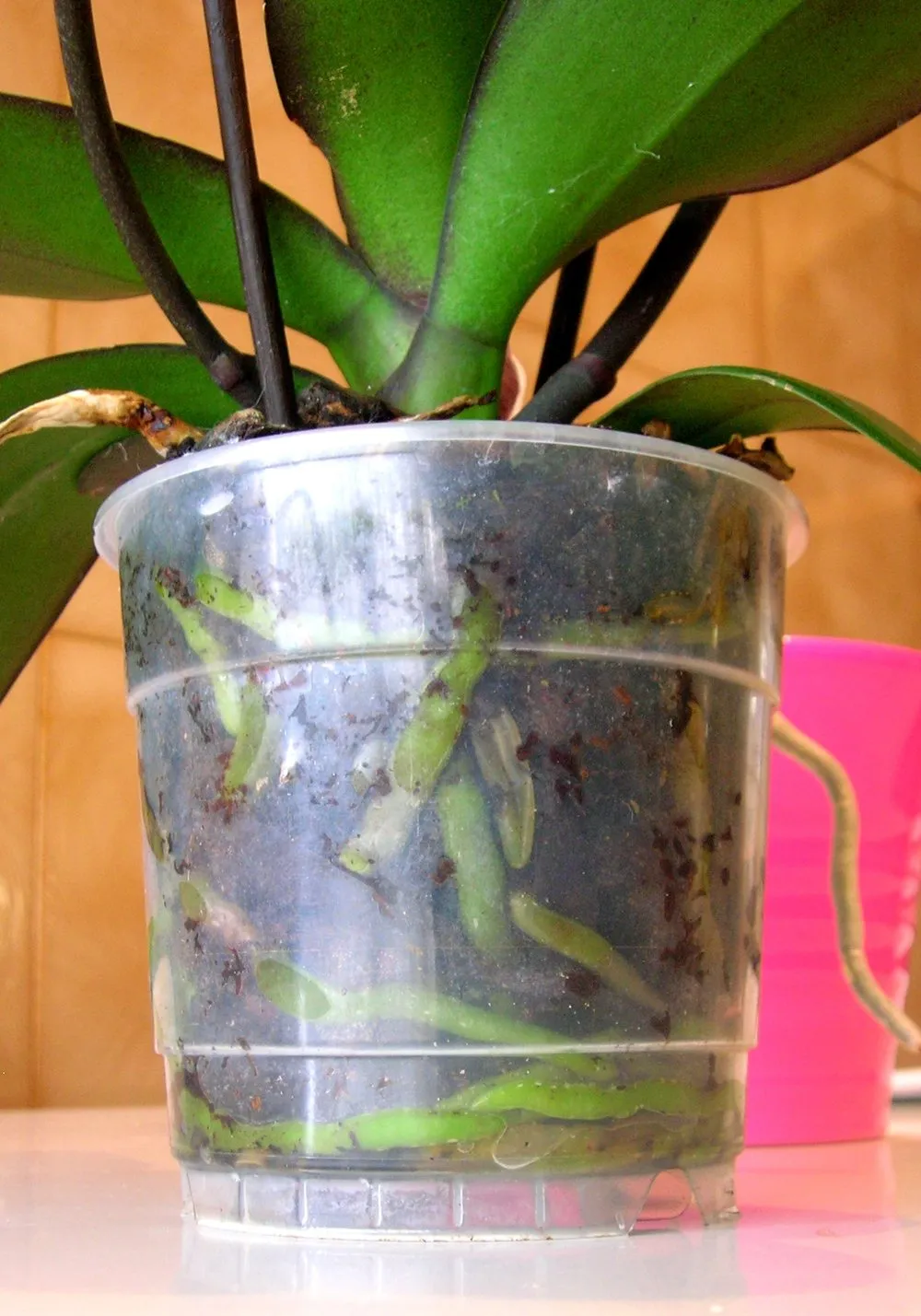
- How often: roughly once a week in the growing season, a little less in winter. It's better to check the roots than to stick to a rigid schedule: healthy roots are plump, firm and silvery-white, while grey, shrivelled roots mean the plant is too dry.
- How: water from above and tip any excess out of the outer pot or saucer. You can also hold the pot under a gently running tap (the RHS suggests about 30 seconds) or stand it briefly in a bowl of water, then drain it thoroughly.
- What water: tepid, at room temperature, ideally rainwater. The RHS points out that moth orchids don't tolerate the chlorine in tap water, so if you have no rainwater, use boiled water that has cooled.
- What to avoid: don't pour water onto the leaves or into the centre of the plant (the crown), and if it happens, dry it off. Never leave the pot standing in water, or the roots will rot.
Humidity
A heated home has dry air in winter. In summer, in hot weather, the RHS suggests lightly misting the leaves and aerial roots, or standing the pot on a wide saucer of damp gravel (with the base of the pot above the water). Don't mist the flowers, as this leaves spots on the petals. Another RHS guide says misting isn't needed and recommends a humidifier or a gravel tray instead; both approaches are safe as long as water doesn't sit on the leaves or in the crown.
Feeding
- In the growing season, feed lightly but regularly with a fertiliser made for orchids, following the manufacturer's instructions. Too much feed causes damage.
- Every fourth watering, use plain water without feed: this flushes out the salts that build up in the compost.
- In winter, feed sparingly or not at all.
Repotting
Repot when the orchid has outgrown its pot or has been in the same bark for two years. The best time is when the roots are growing, which you can tell by their green tips.
- Take the plant out, remove the old bark and gently untangle the roots.
- Cut off any roots that are brown, shrivelled, mushy or hollow.
- Trim healthy roots to about 12cm.
- If the roots fit in the old pot, reuse it. Don't use a pot that is too big: the extra bark holds moisture for a long time and the roots rot.
- Set the plant at the same level as before, fill with fresh orchid compost (sold as orchid compost or orchid bark in garden centres) and firm gently. Don't bury the aerial roots. Support a wobbly plant with a small cane.
- Water thoroughly, let it drain and don't leave it standing in water.
Never plant a moth orchid in ordinary garden soil or general compost (loam-based or multipurpose).
After flowering: cutting back the spike and getting it to flower again
- When the flowers fade, cut the flower spike just above the second node (the small joint on the stem) below the faded flowers. A new side shoot with flowers may grow from the node.
- If the whole spike has died back (it is pale and dry), cut it off at the base. A new spike will take longer to appear, but is usually stronger.
- You can remove faded flowers that haven't dropped on their own.
- Large, healthy orchid not flowering for a long time? Move it for about a month to a spot about 5°C cooler, such as a cooler room. The drop in temperature usually prompts it to send up a new flower spike. The natural winter chill is often enough, but in a very warm home you need to help it along.
Common problems
| Symptom | Likely cause | What to do |
|---|---|---|
| Soft, brown, rotting roots | Too much water, old broken-down bark or a pot that is too big | Repot into fresh bark, cut off rotten roots, water less often and don't leave water in the outer pot |
| Grey, shrivelled roots | Too dry | Water more regularly; in hot weather increase humidity |
| Buds dropping | Cold or a draught, for example on the way home from the shop or by a window | Move it somewhere warmer, away from draughts |
| Scorched patches on leaves | Direct summer sun | Move it back from the window or to an east- or west-facing one |
| Spots on petals | Misting the flowers | Mist only the leaves and roots, or not at all |
| No flowers | Too warm all year round or too little light in winter | A month somewhere about 5°C cooler, and a bright windowsill in winter |
| White "fluff" on leaves and stems | Mealybug or scale insects | Check the plant regularly and act early; the RHS suggests washing the pests off under the tap, as they resist ordinary insecticides |
Baby plants on the spike (keiki)
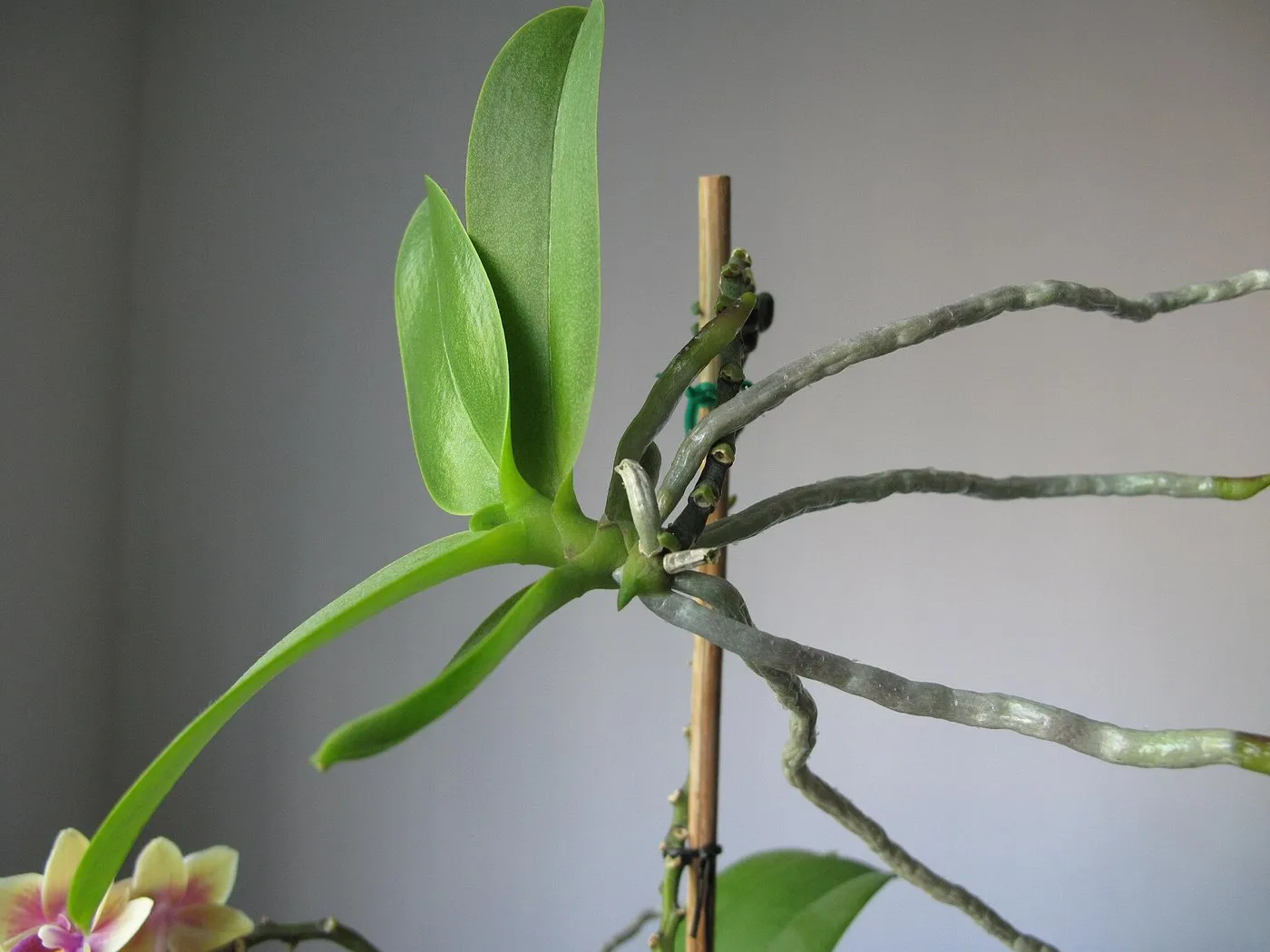
Sometimes a small plantlet called a keiki grows from a node on the flower spike. Once it has several good roots, cut it off and pot it in orchid compost. Water sparingly at first and mist the leaves daily. A special keiki paste to encourage plantlets is sold by specialist orchid suppliers; ordinary rooting hormone won't work.
Where to get help
- RHS: how to grow Phalaenopsis – the most complete guide.
- RHS Gardening Advice – RHS members can ask the experts a question (online, by phone or at an advice desk in RHS gardens), for example about a sick plant or pests.
- Local garden centres and orchid societies in your area.
This guide is general information based on Royal Horticultural Society advice for moth orchids. Other orchids (such as Cymbidium, Dendrobium or Paphiopedilum) have different needs, so check the advice for your type before changing how you care for it.
Sources
Photos
- Cover: „Phalaenopsis Orchid”, author: Sanx, licence CC BY 3.0; cropped or resized.
- Photo 1: „Tiesto transparente phalaenopsis”, author: Javier Mediavilla Ezquibela, licence CC BY 2.5; cropped or resized.
- Photo 2: „Little orchid D1306 keiki before cutting”, author: Tangopaso, licence Domena publiczna; cropped or resized.
Tags
Share with friends