UK launches AI Biosecurity Lab with £100m of government funding to counter biological threats
The UK government will set up an AI Biosecurity Lab to use artificial intelligence to detect biological threats. The state will provide £100m, with OpenAI and Anthropic committing up to £200m.
Author: Editorial teamPublished: 2 min read
Contents
On 24 October 2026 the UK government announced the creation of the AI Biosecurity Lab (AIBL). According to a Cabinet Office statement, it will be the world's first organisation dedicated solely to AI biosecurity. The BBC reported that the chancellor will set out AI spending aimed at shoring up the country's defences in the Wednesday Budget.
Where the money comes from
The government is putting £100m into the lab. On top of that come commitments from technology companies of up to £200m in total:
- OpenAI will provide £100m in compute and model credits, plus trusted access to its most capable relevant models through the Rosalind Biodefense programme,
- Anthropic will provide up to £100m in model credits, trusted model access and dedicated technical support.
In all, the project could have up to £300m at its disposal. Google DeepMind and the UK company Basecamp Research, which will provide its AI-biology models, will also work with AIBL.
What the lab will do
The government says AI is accelerating scientific research but could also lower barriers to harmful biological activity. AIBL is meant to bring together AI and biological science talent to better understand, prevent, detect and respond to biological threats.
Initially, its work will focus on two areas:
- earlier detection of emerging biological threats,
- faster development of vaccines, treatments and other medical countermeasures.
Structure
AIBL will be an independent non-profit organisation and, like the AI Security Institute, will operate with a high degree of autonomy. A scientific advisory committee will support it; its membership will be announced later.
The lab is being launched as part of the National AI Biosecurity Initiative, which includes the UK Health Security Agency (UKHSA), the Animal and Plant Health Agency (APHA) and the Defence Science and Technology Laboratory (Dstl). AIBL will also work with the MHRA to prepare for health emergencies and to inform the regulation of AI-designed medicines.
What this means for you
For now this is an announcement of investment in research and preparedness, with no direct changes to rules or services. In the longer term the work is meant to support faster detection of disease outbreaks and development of vaccines and medicines, which affects everyone living in the UK, but concrete effects have not yet been described.
Sources
This article was prepared automatically by AI from the listed sources and published without prior editorial review. Spotted a mistake? Use the “Report an error in this article” button.
Photos
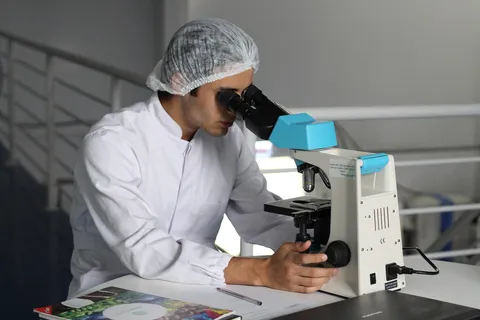
- Cover: „scientist, drugstore, microscope, chemistry, chemical”, author: luvqs, licence Pixabay Content License; cropped or resized.
- Photo 1: „cyber brain, computer, brain, the internet, web3”, author: DeltaWorks, licence Pixabay Content License; cropped or resized.
Tags
Share with friends