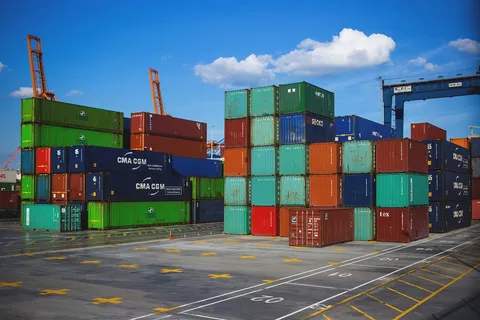
Imported CBAM goods that may not count towards the £50,000 registration threshold
HMRC has set out which imported goods covered by the Carbon Border Adjustment Mechanism (CBAM) may not count towards the £50,000 registration threshold. These include goods imported for private use, goods of UK origin and some customs procedures.
Author: Thames Compass editorial teamPublished: 2 min read

Contents
HMRC has published guidance on imported goods covered by the Carbon Border Adjustment Mechanism (CBAM), which is linked to emissions. The document explains when the value of such imports does not count towards the registration threshold, which is £50,000.
Goods imported for private use
Goods brought in for private use are exempt from CBAM and do not count towards the threshold. Examples given include cement for building your own house, aluminium for a roof, or an iron or steel garden sculpture. The list is not exhaustive. Imports for commercial use, such as goods for sale, for providing a service or for use in a business to make a profit, may be liable for CBAM and do count towards the threshold.
Goods of UK origin
Goods of UK origin that are brought back into the UK are exempt from CBAM, even when released into free circulation. The guidance gives the example of aluminium wire made in the UK, sent to China and imported back without any change to its components. That wire does not count towards the threshold.
Returned goods relief and temporary admission
The value of goods re-imported under returned goods relief, within three years of export and in an unaltered state, does not count towards the threshold. Goods brought in temporarily with full relief from customs duties also do not count, unless they are later released into free circulation and duties become due. Where relief is partial or absent, the value counts straight away.
Special customs procedures
Goods entering the UK under special customs procedures, such as inward processing, freeports, authorised use or customs warehousing, are not in scope of CBAM unless they are released into free circulation and customs duties are due. Under inward processing, either the whole value of the imported CBAM goods or only part of it counts, depending on what the goods become after processing. Where goods are exported for processing abroad, the difference in value counts. The guidance gives an example: goods worth £70,000 when exported and £130,000 after processing and re-import mean £60,000 counts towards the threshold.
What this means for you
These rules mainly affect people and businesses bringing goods into the UK for commercial purposes. Imports for personal use are exempt from CBAM and do not count towards the threshold. Anyone trading in goods should check whether their imports fall under CBAM and whether the total value is close to or above £50,000, at which point registration is required. The HMRC guidance sets out the full details.
Sources
This article was prepared automatically by AI from the listed sources and published without prior editorial review. Spotted a mistake? Use the “Report an error in this article” button.
Photos
- Cover: „cranes, industry, crane system, port, logistics”, author: wal_172619, licence Pixabay Content License; cropped or resized.
- Photo 1: „high level rack, warehouse, range, shelf, shipment”, author: delphinmedia, licence Pixabay Content License; cropped or resized.
Tags
Share with friends