Credit score in the UK: how to check and improve your credit rating
What a credit score is, how many points each agency gives, how to check your credit report for free and what really raises your score. A plan for building a history from scratch, correcting errors and the most common myths.
Author: AdministratorPublished: 9 min read
This information is awaiting editorial verification

Contents
In brief
- There is no single, shared credit score in the UK. Each credit reference agency calculates its own score, and a bank or shop will assess you by its own rules anyway.
- Scales (as of October 2026): Experian 0–1250, Equifax 0–1000, TransUnion 0–999 (the new scale is being phased in until June 2027; previously it was 0–710). Scores from different agencies cannot be compared.
- You can get a full credit report (statutory credit report) from each agency free of charge. Checking your own score does not lower it.
- Your credit history from Poland does not carry over to the UK. To get started: register on the electoral register, pay bills on time, and have your phone and utilities in your name.
- The most damaging things are: missed payments, many credit applications in a short time and high use of your limits. The agencies recommend using less than 25% of your credit card limit.
- Negative entries (missed payments, defaults, CCJs) usually disappear after 6 years.
- You don't need to pay anyone to improve your credit history. Everything such companies do, you can do yourself for free.
What a credit score is and what a credit report is
A credit report (credit file) is a record of your finances kept by credit reference agencies. According to the ICO, it contains, among other things:
- how you repay loans, cards, your phone contract and utility bills,
- your addresses from recent years,
- your entry on the electoral register,
- court judgments for debts (CCJs), bankruptcy and other debt procedures,
- people with whom you have a joint account or loan (financial associations),
- a list of companies that have recently checked your report.
A credit score is a number the agency calculates from this report to show you how your history may look to lenders. According to Citizens Advice, a bank, shop or mobile operator does not look at this number, but calculates its own score according to its own rules. It also takes into account data from your application, such as income and expenditure. That is why a refusal from one company does not mean a refusal from another, and a high score in an app does not guarantee credit.
If a company refuses you credit after checking your report, it must tell you which agency it used. Then check your report with that particular agency.
Credit reference agencies and their scoring scales
There are three main agencies in the UK: Experian, Equifax and TransUnion. MoneyHelper also lists a fourth, smaller agency, Crediva. Companies report data to selected agencies, so your report may look slightly different at each of them. Scoring scales (as of October 2026):
- Experian: 0–1250. Since the end of 2025 Experian has calculated its score on a new scale (previously 0–999). According to Experian, the bands are: Low 0–640, Fair 641–860, Good 861–1000, Very Good 1001–1120 and Excellent 1121–1250. The average score is 850. The new scale takes into account, among other things, rent payments, if they are included in the report (more on this below).
- Equifax: 0–1000. According to Equifax, the score is described from "poor" to "excellent".
- TransUnion: 0–999. According to TransUnion, the new scale replaces the old 0–710 one and is being phased in from the end of September 2026 to June 2027. During this time you may see two different TransUnion scores in different apps. Bands on the new scale: Very Low 0–487, Low 488–562, Fair 563–652, Good 653–785 and Excellent 786–999.
The number on its own says little. What matters more is what the report contains and whether the data is correct.
How to check your report for free
- Statutory credit report. You have the right to a free copy of your data from each agency. According to the ICO, look for "statutory report" on the agency's website. The agency has a month to reply, and in special cases it may extend this deadline by 2 months, but it must tell you in advance.
- Free apps. Agencies and their partners offer free accounts with a score and report. You don't have to buy a subscription. If you start a free trial of a paid service, cancel before it ends.
- Check all the agencies. According to MoneyHelper, each may hold different data about you. It's best to review your report with each of them before an important application, for example for a mortgage.
Checking your own report is what is known as a soft search. Only you and the agency can see it, so it does not affect your score.

What raises and what lowers your score
Payments on time. This is the basis. Late and missed instalments, and after a longer delay a "default" entry, stay on your report for 6 years (Citizens Advice). Set up direct debits for bills and instalments so you don't forget a due date.
Credit utilisation. This is the part of your card limit that you use. According to MoneyHelper, the agencies recommend it be less than 25%, for example no more than £250 on a £1,000 limit. It is best to pay off the whole card balance every month. Also avoid withdrawing cash on a credit card and don't exceed your agreed overdraft.
Credit applications (hard search). Every application you make leaves a mark on your report that other lenders can see. Several applications in a short time can look as if someone urgently needs money or is being refused. According to the ICO, Experian and Equifax show most such marks for a year, and TransUnion for 2 years. How to avoid this:
- before applying, check your chances with an eligibility checker. It only does a soft search,
- when comparing offers, ask for a quote (quotation search) rather than submitting an application,
- after a refusal, don't immediately submit another application. First check your report and look for the reason.
Court judgments and debt procedures. A county court judgment for a debt (CCJ) is visible on the register for 6 years, unless you pay the full amount within a month (GOV.UK). Bankruptcy, an IVA and a Debt Relief Order also lower your score.
Joint finances. According to the ICO, you are linked to another person only by a joint account or joint loan (sometimes also a guarantee). Simply living at the same address, for example with housemates, does not link your reports. If a joint account has been closed, write to the agency asking for a disassociation (notice of disassociation). Then a former partner's debts will not affect your rating.
Frequent moves and no history. Agencies check your address, so living at one address for longer and being on the electoral register helps. Having no history at all also makes it harder to get credit, because the lender has nothing to base a decision on.
A plan to get started: credit history from scratch
According to Experian, a good history from another country will not help you in the UK. You build a British one from scratch, and after opening your first accounts you usually wait up to 6 months for results. The steps:
- Bank account. Run without arrears, it builds a history. If a bank refuses a standard account, ask about a basic bank account. You will find details in the guide Bank, kredyt i historia kredytowa w UK.
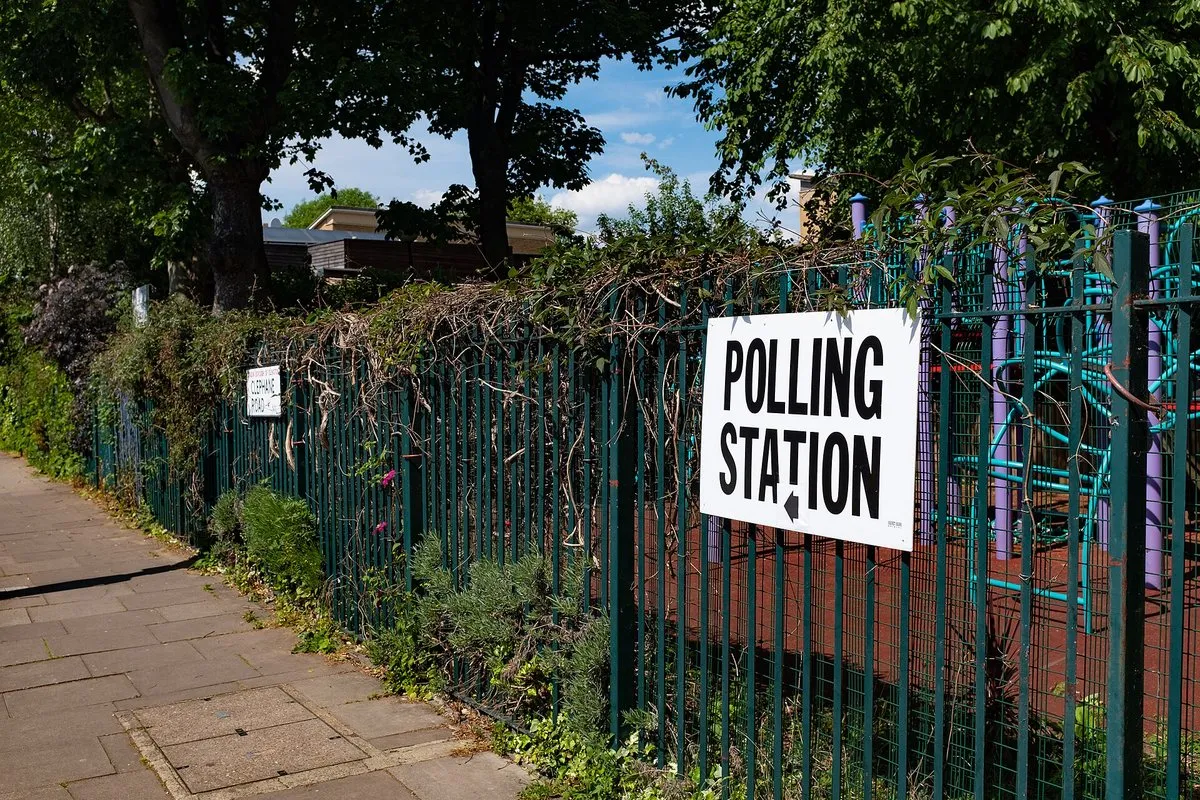
- Registering on the electoral register. According to GOV.UK, a Polish citizen can register in England and Northern Ireland from the age of 16, if they have permission to stay in the UK or do not need it. In Scotland and Wales you can do this from the age of 14. People of other nationalities can check their eligibility on the same page. Credit reference agencies can legally buy the full electoral register (Croydon Council) and use it to check your address. Register again after every move.
- Free report. Order a statutory report from each agency and check that the data is correct.
- Bills in your name. According to Experian, gas and electricity contracts billed monthly may be included in your report if you pay in full and on time. Prepayment meters do not build a history. Regular top-ups of a pay-as-you-go phone may help if you ask the operator to move you to a contract. How to sort out your bills is described in the guide Rachunki za dom w UK.
- Rent on your report. See below.
- Credit builder card. After a few months you can consider a card with a low limit for people with a short history. According to Experian, it usually has a high interest rate. Use it for small, regular expenses, use less than 25% of the limit and pay off the whole balance every month, and you won't pay interest. Before applying, check your chances with an eligibility checker, because a rejected application leaves a mark.
- Review your report every few months. That way you will quickly notice an error or a loan taken out using your details.
Rent on your credit report
According to Experian, rent paid on time can raise your Experian score. Other agencies may not take it into account. Rent gets onto your report in two ways:
- The landlord or manager reports it. This applies to council and social housing tenants and people renting from large companies (over 500 properties).
- You report it yourself through a Rental Exchange programme partner. Experian lists, among others, CreditLadder, Canopy, Emma, Wollit and UpliftMoney. Such a company does not collect the rent; with your consent it just checks the transfers on your account. The landlord's consent is not needed.
Conditions according to Experian: the rent must leave an account in your name (transfers made through a housemate do not count), past payments cannot be added, and to start you need a 6-month payment history or a valid tenancy agreement. Rent usually appears on the report within 8 weeks. We write about renting without pitfalls in the guide Wynajem pokoju lub mieszkania w UK.
An error on your report: how to correct it
- Report the error to the agency where you found it, and to the company that supplied the data (e.g. the bank). The company can correct its entry directly with the agency. Attach evidence, such as confirmation of repayment, and keep copies of letters.
- According to the ICO, the agency must reply within 28 days to say whether it has removed the entry, corrected it or done nothing.
- Notice of correction. If an entry is accurate but needs explanation, for example a debt from a period of illness or one already repaid, you can add your own statement of up to 200 words to your report. Anyone who checks that entry will see it.
- Complaint to the ICO. If the agency or company does not correct an obvious error, make a complaint to the ICO. However, the ICO does not decide disputes over whether a debt is owed.
- A loan you did not take out? This may be identity theft. Report it to the company, the agency and the police. How to recognise such fraud is described in the guide Oszustwa w UK.
The most common myths
- "Checking my own score lowers it". No. It is a soft search that lenders cannot see.
- "I have a good history in Poland, so I have one in the UK too". No. British agencies start from zero.
- "I live with a housemate, so their debts will harm me". No. Reports are linked only by a joint account or joint loan, not by an address alone.
- "Having no credit is the best history". Not necessarily. Without a history the lender has nothing to base a decision on. It is better to have a few agreements repaid on time.
- "A high score guarantees credit". No. A bank calculates its own score and also checks income and expenditure.
- "It's worth paying a company to fix your credit history". No. According to MoneyHelper, everything such a company does, you can do yourself for free.
- "Buy now, pay later doesn't count". Be careful. According to the FCA, from 15 July 2026 most BNPL services are regulated, and the company must check before the agreement that you can afford to repay. Treat BNPL like any other credit and pay instalments on time.
Where to get help
- MoneyHelper – a government service with free advice on credit and credit history.
- Citizens Advice – advice on credit and debt.
- ICO – complaints when an agency or company does not correct incorrect data.
- StepChange and National Debtline – free advice if you have trouble repaying debts. You will find phone numbers and information on the Breathing Space scheme in the guide Bank, kredyt i historia kredytowa w UK.
This guide is general information and does not replace financial advice. Scoring scales and agency rules may change (as of October 2026), so before making a decision check the current information on the websites listed.
Sources
- Credit
- Credit explained
- How lenders decide whether to give you credit
- How to improve your credit score
- How to check your credit report for free
- Register to vote
- Credit rating agencies and the electoral register
- County court judgments (CCJs) for debt
- Buy Now Pay Later
- Experian Credit Score: what your score means
- Introducing the 1250 score
- Building a credit history if you're new to the UK
- Rent reporting
- Credit score ranges
- TransUnion launches next-generation expanded 0–999 consumer credit score in the UK
Photos
- Cover: „Bunch of credit cards”, author: Yuri Samoilov, licence CC BY 2.0; cropped or resized.
- Photo 1: „Business professional engages in online shopping from home workspace while using credit card”, author: Shixart1985, licence CC BY 2.0; cropped or resized.
- Photo 2: „Polling Station Sign, Canonbury, London, European Elections 2019”, author: Russss, licence CC0 1.0; cropped or resized.
Tags
Share with friends