Warsaw researchers: high charging voltage damages the cathode material of lithium-ion batteries
Researchers from the University of Warsaw and Warsaw University of Technology have shown that charging cells with an NMC622 cathode to high voltages causes irreversible structural changes. Their work concerned the cathode material, not whole phones.
Author: Editorial teamPublished: 2 min read
Contents
A team of scientists from the Faculty of Chemistry at the University of Warsaw and the Faculty of Physics at Warsaw University of Technology has examined what happens inside lithium-ion cells when they are charged to high levels. As the Antyweb website reported on 19 October 2026, keeping a battery at a high state of charge for long periods may speed up its ageing.
What was studied
The researchers focused on the NMC622 cathode material, a mixture of nickel, manganese and cobalt in a 6:2:2 ratio. It is one of the more commonly used materials in modern batteries. For the analysis they used X-ray diffraction, Raman spectroscopy and electron microscopy.
The material was tested at various potentials, including 4.3 V and 4.7 V versus Li/Li⁺. Under these conditions, irreversible changes begin to occur in the cathode: microcracks appear between the grains, and the crystal structure becomes deformed. At high potentials, the layer near the surface of the grains also restructures, which may worsen the cathode's electrochemical properties.
After just 50 charging cycles to 4.7 V, cracks and losses of material were visible.

Charging methods
The team compared two methods: constant current (CC), which is common in laboratories, and constant current and constant voltage (CCCV), which is the standard in commercial chargers. With CCCV, lithium ions were removed from the material more deeply and more evenly. According to the authors, this may matter for battery durability, but it requires further assessment.
The scientists also developed a methodology that industry could use to assess the condition of used batteries and to design better charging systems.
What this means for users
Antyweb gives practical tips on looking after a battery:
- do not charge to 100% unnecessarily; 20–80% is considered the optimal range,
- top up your phone during the day instead of plugging it in overnight,
- do not leave your phone on the charger once it is charged,
- do not use it intensively while charging,
- avoid high temperatures, e.g. charging in a sunny spot or under a pillow.
This is advice quoted by the website, not conclusions stated directly by the authors of the study.
Important caveat
The study concerned the cathode material under laboratory conditions, not finished smartphones. The voltages are given relative to lithium (Li/Li⁺), so they do not correspond directly to the "100%" indicator on a phone. The source text does not state exactly how much a phone battery's lifespan is shortened. The claim that battery life is shortened "by as much as half" appears in Antyweb's teaser, but we found no justification for it in the body of the article.
Sources
This article was prepared with the help of AI from the listed sources and checked by our editors before publication.
Photos
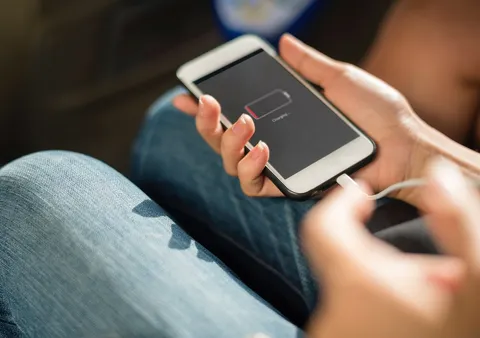
- Cover: „smartphone, mobile, phone, gadget, touchscreen”, author: StockSnap, licence Pixabay Content License; cropped or resized.
- Photo 1: „laboratory, analysis, chemistry, research, chemist”, author: jarmoluk, licence Pixabay Content License; cropped or resized.
Tags
Share with friends