"Vabank" during martial law: how Machulski's comedy reached Polish cinemas after 13 December 1981
After martial law was imposed, Polish cinemas had little to show. One finished film was ready: Juliusz Machulski's "Vabank", which became a huge hit. WP Film looks back at its story.
Author: Editorial teamPublished: 3 min read
Contents
It is 45 years since "Vabank" first appeared. The website WP Film recalls the circumstances in which Juliusz Machulski's film reached the screen and why it became one of the most popular Polish titles.
Cinemas with nothing to show
On 13 December 1981 the communist authorities of the Polish People's Republic (PRL) imposed martial law in Poland. Cultural institutions were closed, and cinemas reopened in the first weeks of 1982. According to WP Film, reopening them was meant to distract Poles from politics, from "Solidarity" and from a bleak daily reality.
There was a problem with the programme, though. Most domestic films had failed to pass the party's vetting and were shelved. There were no new productions either, because Polish artists had boycotted the regime's media in protest at the military junta, repression and censorship. The authorities therefore had to import more entertainment films made outside the socialist bloc. They also had one finished Polish production, completed before martial law began: "Vabank".

Where the film came from
Juliusz Machulski was 22 when he wrote the screenplay, and he was not yet an established director. He drew on American cinema for inspiration, which was not always welcome at the time. The author of the article compares "Vabank" to the Oscar-winning "The Sting" by George Roy Hill, starring Paul Newman and Robert Redford. Both films share intelligent entertainment built on a carefully planned con, without excessive violence.
The road to production was not smooth. In his book "3174 filmy mojego życia" ("3,174 Films of My Life"), Machulski recalled that Andrzej Wajda did not want him to make his debut, believing he was not ready. After many twists, the screenplay, then titled "Kwinto", was sent into production. The director had not originally planned a comedy. He wanted to make a crime film with a well-constructed plot, and the humour emerged while he worked on the dialogue and the relationships between the characters.
Premiere and hit
According to WP Film, "Vabank" was shown to its first audiences and critics at the end of 1981 at the Festival of Polish Feature Films in Gdynia. It reached cinemas a few months after martial law was imposed. The film became a big hit, and for many years Machulski was the highest-grossing director in Polish cinema. The film is still known for its quotes and scenes.
Not everyone in the industry welcomed its success. Machulski writes in the book that the head of the Gdynia jury, Kazimierz Kutz, held a grudge over the popularity of his first films and called him the "wunderkind of martial law".
In the WP Film material, the director himself says: "People wanted to escape from everyday life and this film gave them that."
What this means for you
This is a historical piece with no direct consequences for people living in the UK. For anyone who wants to discover classic Polish cinema, or show it to children raised in Britain, "Vabank" remains one of the cult titles. The source does not say where the film can be watched in the UK today.
Sources
This article was prepared automatically by AI from the listed sources and published without prior editorial review. Spotted a mistake? Use the “Report an error in this article” button.
Photos
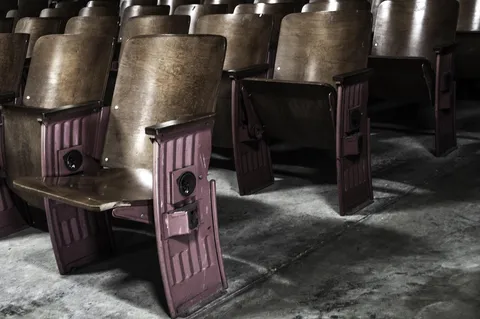
- Cover: „theatre, seats, old, theater, cinema”, author: coltsfan, licence Pixabay Content License; cropped or resized.
- Photo 1: „slide projector, slide, projector, slides, filmstrip”, author: Alexey_Marcov, licence Pixabay Content License; cropped or resized.
Tags
Share with friends