HMRC to receive more data on interest and card sales under new rules from 2028
The government laid regulations on 3 November 2026 placing ongoing reporting duties on banks and card service providers. Customers may have to give their National Insurance number.
Author: Editorial teamPublished: 3 min read
Contents
The UK government laid "The Data-gathering (Ongoing Data: Interest and Payment Card Transactions) Regulations 2026" on 3 November 2026. They cover data on account interest and card sales that institutions pass to HMRC.
What is changing
Today HMRC collects this data by sending individual notices to institutions (Schedule 23 to the Finance Act 2011). The new rules introduce standing reporting obligations to replace manual notices. They rest on Schedule 23 to the Finance Act 2026, which received Royal Assent in March 2026. The new regulations specify who must report and what data they must provide.
According to HMRC's paper, the changes cover:
- data on interest from bank and building society accounts and from other sources,
- card sales data from providers of card acquiring services, such as merchant acquirers.
Institutions will have to report more often and more quickly, using a single XML format. They must also collect customers' tax identifiers, such as National Insurance numbers, so the data can be matched to individual taxpayers. Due diligence checks on data quality will be introduced, along with a reformed penalties regime for non-compliance.

Who is affected
The changes mainly affect financial institutions and card service providers. HMRC estimates that about 600 suppliers of financial account information (including subsidiaries) and 13 suppliers of card sales data already report. Smaller providers that do not currently receive notices will also be brought into scope. Civil society organisations such as credit unions are excluded from the requirement to register and report.
The government's aims
HMRC says better data will make things simpler for people who pay their tax correctly. Examples include automatic registration for the relevant tax regime, pre-populated tax returns and better PAYE coding. It also wants to spot under-reported income and hidden assets more easily.
According to the paper, the measure is expected to bring in £40 million in 2028 to 2029, rising to £840 million by 2031 to 2032. No estimates are given for 2026 to 2027 and 2027 to 2028.
What this means for you
Some people will have to give their bank, building society or card service provider their National Insurance number and, where relevant, their VAT registration number. This applies to some interest-bearing products and to accounts held with card acquiring providers. HMRC says people who are eligible for a National Insurance number but do not have one will be expected to apply for it and give it to the institution. HMRC says this will affect a very small number of people, but foreign nationals may be more likely to be affected.
Self-employed people who take card payments should expect HMRC to have a more detailed view of their sales data.
When it takes effect
The GOV.UK summary page says the policy will come into force on 1 March 2028. The detailed paper itself gives the effective date of the measure as 6 April 2028. Our editors have noted this discrepancy.
Sources
This article was prepared automatically by AI from the listed sources and published without prior editorial review. Spotted a mistake? Use the “Report an error in this article” button.
Photos
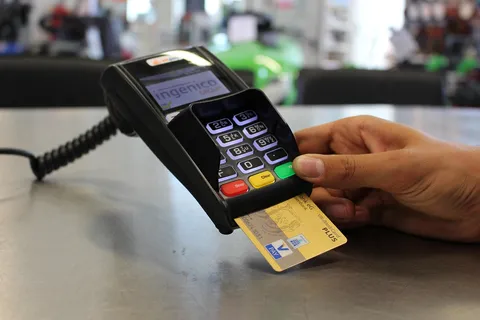
- Cover: „ec cash, card payment, money, cashless, credit card”, author: flyerwerk, licence Pixabay Content License; cropped or resized.
- Photo 1: „typewriter, tax return, government, money, income”, author: viarami, licence Pixabay Content License; cropped or resized.
Tags
Share with friends