Government: secondary schools should stop teaching GCSEs before Year 10
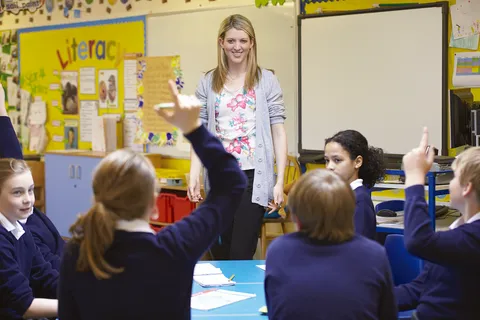
The Department for Education says schools should not start GCSE courses in Years 7 to 9. The change is part of a review of the national curriculum.
Author: Thames Compass editorial teamPublished: 3 min read

The government wants the first three years of secondary school to stop being a run-up to GCSE exams. On 8 November 2026 the Department for Education (DfE) announced plans to treat Key Stage 3, meaning Years 7 to 9, as a distinct phase as part of its review of the national curriculum.
What is changing
The new national curriculum will set an expectation that schools stop the increasingly common practice of starting GCSE preparation early. Under it, schools should not start GCSE courses early for large groups of pupils. They should also not routinely make children narrow their subject options earlier, or enter them for exams early. Teachers will still be able to stretch high-achieving pupils or groups who are ready to go further, as long as this does not narrow their options.
The full new curriculum is due to be published later this year. Content is to be slimmed down and better sequenced across school stages. The government promises a stronger focus on oracy and confident speaking, fluent reading and reading for pleasure, and numeracy. There is also to be a more engaging offer in drama, PE, music and modern foreign languages, along with technical and digital skills. A new enrichment framework will add experiences such as practical experiments and debate.

Why the government is doing this
The department says too many children are switching off from school in their early teens, which affects attendance and attainment. It cites research by Public First Global for the International Baccalaureate, which found that more than half of teachers say GCSE courses dominate the first three years of secondary school. The courses were not meant to begin until Year 10, yet some schools start them as early as Year 7.
The DfE also says the proportion of pupils who are persistently absent almost doubles between Year 7 and Year 9, reaching one in four children. For white working-class children, it says persistent absence rates are 75% higher in secondary than in primary school.
Education Secretary Lucy Powell said the pressure of GCSEs and an overcrowded curriculum were leaving too many children with a narrower offer in Key Stage 3. She added: "I'm putting a stop to that."
The change was welcomed by Sir Hamid Patel and Baroness Estelle Morris, co-chairs of the Independent Inquiry into White Working Class Educational Outcomes, and by Becks Boomer-Clark of Lift Schools, co-chair of the KS3 Alliance.
What this means for you
The changes apply to schools in England, where the DfE is responsible for the curriculum. The announcement does not say when schools will be expected to follow the new rules. Parents of children in Years 7 to 9 may in future see less early narrowing of subjects and fewer early exams, but the details depend on the final text of the curriculum. It is worth watching for announcements from your child's school.
Sources
This article was prepared automatically by AI from the listed sources and published without prior editorial review. Spotted a mistake? Use the “Report an error in this article” button.
Photos
- Cover: „education, student, boy, classroom, child”, author: JhonDL, licence Pixabay Content License; cropped or resized.
- Photo 1: „guitar lesson, music school, smile, joy, joy of child”, author: ValeriaRodrigues, licence Pixabay Content License; cropped or resized.
Tags
Share with friends