Delayed or cancelled train in the UK: when you can get a refund or compensation
If a train in Britain is cancelled or delayed, passengers may be able to get money back. The rules depend on whether you gave up on the journey or reached your destination late.
Author: Editorial teamPublished: 2 min read
Contents
Winter is the time of year when bad weather most often disrupts train services in Britain. Passengers have several ways to get money back, but they need to know which one to claim. The advice is set out by Polish Express, citing National Rail information.
Refund for an unused ticket
If a train is cancelled or delayed and a passenger decides not to travel, or cannot complete the journey, they can claim a refund for the unused ticket. According to the source, the refund should be made without extra charges.
The claim goes to the retailer where the ticket was bought. This may be a train company or another ticket seller. If the ticket was bought from a station machine, information on how to claim a refund should be available on the machine.

Compensation for a delay
This is a separate matter. Someone who reached their destination despite the problems can claim compensation from the train company responsible for the service. The amount depends on three factors:
- the train company, because each has its own rules;
- the type of ticket, as a single ticket is treated differently from a season ticket, such as a weekly one;
- the length of the delay at the destination.
Each company sets its delay thresholds in its Passenger’s Charter. Generally, the longer the delay, the higher the payout.
Delay Repay
Most train companies run the Delay Repay scheme. According to a 2023 report by the Department for Transport (DfT), it covers all ticket types. Compensation can be claimed regardless of whether the train company was responsible for the delay. So some passengers may be paid even when the weather caused the delay, provided they meet the scheme's conditions.
The same report says that, at the time of the research, all companies in the scheme paid compensation for delays of 30 minutes or more. Most also did so for delays of 15 to 29 minutes. It also notes that not every operator takes part, naming London Overground and the Elizabeth Line as examples.
The delay is measured against the normal timetable or a changed timetable published in advance, for example because of planned engineering work. A claim can usually be made online. Some companies also accept forms by post. Some let you register certain tickets online, which can speed up later claims.
What this means for you
People who use trains regularly, for example to get to work, should check whether their train company takes part in Delay Repay. It is worth reading its Passenger’s Charter to find the delay thresholds. Contact details for train companies are on the National Rail website. For a refund on an unused ticket, you need to go to the place where you bought it.
Sources
This article was prepared automatically by AI from the listed sources and published without prior editorial review. Spotted a mistake? Use the “Report an error in this article” button.
Photos
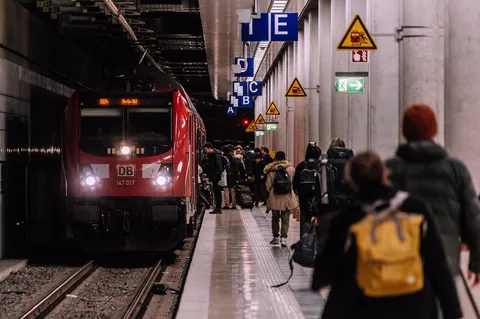
- Cover: „train, railroad, station, passengers, travellers”, author: wal_172619, licence Pixabay Content License; cropped or resized.
- Photo 1: „budapest, train station, western railway station, train, rail”, author: matuska, licence Pixabay Content License; cropped or resized.
Tags
Share with friends