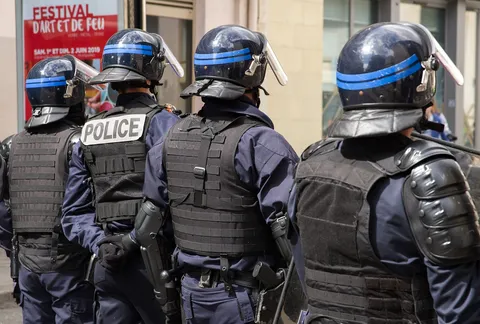
Around 200 Local Police Commands planned for England and Wales, Shabana Mahmood announces
On 18 November 2026, Home Secretary Shabana Mahmood announced the creation of around 200 Local Police Commands across England and Wales. They are to form the foundation of a reform in which each command will have a named Commander.
Author: Thames Compass editorial teamPublished: 3 min read
Contents
Speaking at the annual NPCC and APCC summit, the Home Secretary outlined a plan to restructure policing. Its first element is the creation of Local Police Commands.
Local commands and their commanders
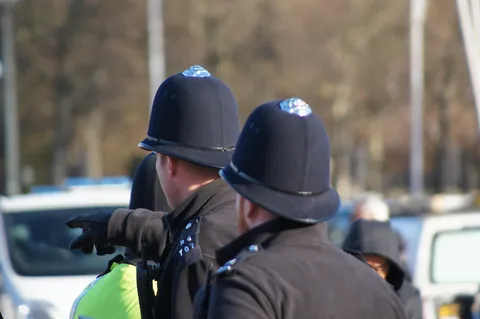
According to the announcement, each command would be roughly the size of a unitary authority. Middlesbrough and the rural area of Rutland were given as examples. In larger local authorities, there could be more than one command.
Each command would have a single mission: tackling the crimes of everyday life, such as antisocial behaviour, burglary, and vehicle and phone theft. Each would be led by a named Commander, accountable to the local community and elected representatives. Standards would be consistent across the country under a new Local Police Guarantee, and a national framework would monitor performance.
Higher tiers: specialist services and the National Police Service
Above the local commands would sit specialist services, which would lead investigations into the most serious and complex crimes. They would be responsible for functions including public order, forensics, major crime, firearms and roads policing. Duplicated administration across the 43 police headquarters would be removed, which would free up thousands of officers for neighbourhood policing. The number of specialist services has not yet been decided.
The top tier would be the National Police Service. Over time, the National Crime Agency and Counter Terrorism Policing would be incorporated into it, and it would also take on responsibility for tackling fraud.
Standards, recruitment and trust
In the year ending March 2025, there were 16,000 allegations of police misconduct, 20 per cent more than the year before. The government says it has strengthened misconduct procedures and made vetting a statutory requirement. From next year, a fast-stream programme is due to bring in up to 200 recruits a year, on a 5 to 10-year path to Superintendent. The College of Policing is also to develop a standard on impartiality in policing, with consultation planned for early in the new year.
The Home Secretary said trust in policing has been falling. Trust and confidence have fallen by 8 and 12 per cent respectively over the last decade. She said more than half the population do not see the police in their area. Differences between areas are large: a shop theft is said to be three times more likely to be solved than in the worst-performing area, and a car theft eight times more likely, depending on where it happens.
Falling crime
The Home Secretary said violent crime is at its lowest level since records began in 1981. Since the current government took office, knife crime has fallen by 11 per cent, gun crime by 18 per cent and homicide by 7 per cent. The government also said it will publish its full response to the report on police leadership by Lord Blunkett and Lord Herbert.
Sources
This article was prepared automatically by AI from the listed sources and published without prior editorial review. Spotted a mistake? Use the “Report an error in this article” button.
Photos
- Cover: „police officers, england, london, city, cityscape”, author: dagmarbendel, licence Pixabay Content License; cropped or resized.
- Photo 1: „car, car wallpapers, police car, police, cops”, author: baoway, licence Pixabay Content License; cropped or resized.
Tags
Share with friends