How to claim PIP in the UK: application, points and appeals (2026)
You start a PIP claim in England or Wales by phone or by letter to the DWP. Eligibility, rates, the points-based assessment, mandatory reconsideration and appeals, plus Scotland and Northern Ireland. As of November 2026.
Author: AdministratorPublished: 9 min read
This information is awaiting editorial verification
Contents
In short
- PIP (Personal Independence Payment) in England and Wales: you start a claim by phoning the PIP new claims line on 0800 917 2222 (Monday to Friday, 8am to 5pm) or by writing to Freepost DWP PIP 1 (GOV.UK, as of November 2026).
- You can get PIP even if you are working or have savings.
- Weekly rates: daily living £76.70 or £114.60, mobility £30.30 or £80.00 (as of November 2026). PIP is tax free.
- If you disagree with a decision, you first ask for mandatory reconsideration, usually within one month of the date of the decision.
- In Scotland, Adult Disability Payment replaces PIP. In Northern Ireland, PIP is run by the Department for Communities.
- This guide describes the rules and does not assess your situation. Free help is available from Citizens Advice: Adviceline in England 0800 144 8848, usually Monday to Friday 9am to 5pm, excluding public holidays (Citizens Advice).
Who can get PIP
PIP can help with extra living costs (GOV.UK, as of November 2026). The DWP assesses how difficult you find everyday tasks (daily living) and getting around (mobility). You must have difficulty with tasks most of the time, which means more than half of the days over a 12-month period.
According to GOV.UK (England and Wales):
- you are 16 or over;
- you expect the difficulties to last for at least 12 months from when they started;
- you can usually make a new claim only if you are under State Pension age; after that you usually claim Attendance Allowance instead. Exception: you were paid PIP or ADP in the last 12 months.
You do not need a physical disability: you might also qualify for the mobility part if a cognitive or mental health condition, such as anxiety, makes getting around difficult (see Mental health in the UK: where to get help). You can get PIP even if you are working; sick notes from work are covered in our guide to fit notes in the UK.
If you are not a British citizen, you normally need to live in the UK, Ireland, the Isle of Man or the Channel Islands, or show that you intend to settle there, and you must not be subject to immigration control (unless you are a sponsored immigrant). People from the EU, Switzerland, Norway, Iceland and Liechtenstein, and their families, usually also need settled or pre-settled status (EU Settlement Scheme).
If you have recently returned from living abroad, you usually need to have lived in England, Scotland or Wales for at least 2 of the last 3 years and be living in England or Wales when you apply. You might qualify sooner after returning from the EU, Switzerland, Norway, Iceland or Liechtenstein.
How much PIP you get
Weekly rates (as of November 2026) according to GOV.UK, the DWP rates table and nidirect:
| Part | Standard rate | Enhanced rate |
|---|---|---|
| Daily living | £76.70 | £114.60 |
| Mobility | £30.30 | £80.00 |
These are the rates for 2026/27. Rates usually change in April, so from April 2027 the amounts may be different.
PIP is tax free, and the amount you get is not affected by your income or savings. It is usually paid every 4 weeks into a bank, building society or credit union account. You can get it at the same time as all other benefits except Armed Forces Independence Payment. If you move onto Universal Credit, you continue to get PIP (GOV.UK); Universal Credit itself is covered in our guide Child Benefit and Universal Credit: how to apply.
How to claim PIP step by step
These steps apply to England and Wales (GOV.UK, as of November 2026).
- Start your claim. Call the PIP new claims line on 0800 917 2222, Monday to Friday 8am to 5pm, and answer some basic questions about you and your health condition. Relay UK: 18001 then the same number; there is also a BSL video relay service. From abroad: +44 191 218 7766. Someone else can call on your behalf, but you must be with them. Instead of phoning, you can write a letter saying you want to start a PIP claim, with your name and address, to Freepost DWP PIP 1 (no postcode or stamp needed). In some areas you can make your full application online.
- Complete the form “How your disability affects you”. If you applied by phone, you get a link to the form by email or a paper form by post (usually within 2 weeks). Include supporting documents if you have them, for example a prescription list or information from your doctor. Return the form, or complete it online, within 1 month; for more time, call the PIP enquiry line on 0800 121 4433 (Monday to Friday 9am to 5pm).
- Assessment and decision. If the DWP needs more information, it invites you to an assessment (next section). A letter tells you the decision.
Terminal illness (special rules for end of life). This applies if a doctor or other medical professional has said you might have 12 months or less to live. You call the PIP claims line and ask to start a claim under these rules; form SR1 is filled in by a doctor or other medical professional. There is no face-to-face assessment, and you automatically get the daily living part, at the higher rate of £114.60 a week.
The PIP assessment and points
According to GOV.UK (as of November 2026) you might be invited to an assessment with a health professional. It can take place at an assessment centre, at your home, over the phone or by video call, and usually takes 1 hour.
Citizens Advice (advice for England): missing the assessment can lead to your claim being rejected. Contact your assessment provider straight away if you cannot attend or have already missed it (the number is on your appointment letter): they may reschedule it if you have a good reason. You can challenge a rejection because you missed the assessment by asking the DWP to change the decision. Ask for an interpreter at least 2 working days before the assessment; you must be given at least 7 days' written notice of the date (unless you agreed to a shorter notice period).
Points (Citizens Advice, England): each activity descriptor carries between 0 and 12 points, and the assessor must choose the descriptor with the highest number of points that applies to you on most days (more than 50% of the days in a year). Points are counted separately for daily living and mobility: 8 to 11 points give the standard rate and at least 12 give the enhanced rate. The DWP decides how many points are awarded in your case; if you are unsure, get free advice (see “Where to get help”).
Decision, reviews and reporting changes
The first award is between 9 months and 10 years, depending on whether your needs are likely to change (GOV.UK, as of November 2026). You continue to get PIP while your claim is being reviewed, and afterwards it can be increased, reduced or stopped. Report changes straight away to the PIP enquiry line on 0800 121 4433 (Relay UK: 18001 then the same number), including a plan to go abroad for more than 4 weeks and any change in your needs. You could be taken to court or have to pay a penalty if you do not report a change.
Mandatory reconsideration and appeals
If you disagree with a decision, you first ask for it to be looked at again, which is called mandatory reconsideration; it is free (GOV.UK, as of November 2026). Whether to ask for one and how to put your case depends on your circumstances: get free advice (see “Where to get help”).
- Ask for reconsideration usually within one month of the date of the decision. If you write, the letter or form must arrive within this time. After one month you can ask only if you have a good reason (for example, if you were in hospital or had a bereavement) and you must explain the delay. Contact the benefits office that gave you the decision (by phone, by letter or on a form; the details are in your decision letter). Write your full name, date of birth and National Insurance number at the top of each piece of evidence.
- Remember the scope. Your whole claim is looked at again: the benefit may stop, stay the same, increase or decrease.
- Appeal to the tribunal if you still think the decision is wrong after you get your mandatory reconsideration notice (GOV.UK). You appeal to the Social Security and Child Support Tribunal only after you get that notice, usually within one month of the date on your mandatory reconsideration notice; after that you must explain the delay, and your appeal might not be accepted. It is free; by post, use form SSCS1. Benefit appeals helpline (England and Wales): 0300 123 1142, Monday to Friday 9am to 4pm.
Will the PIP rules change
The government is carrying out the Timms Review, the first full review of PIP (GOV.UK, as of November 2026). According to Budget 2026, the government will set out its response to the final reports before the end of 2026, followed by a White Paper early in 2027 and legislation later that year. According to Citizens Advice, nothing is changing now, but the rules may change after the review; check its latest publications.
Scotland, Wales and Northern Ireland
Scotland. Adult Disability Payment (ADP) replaces PIP (mygov.scot, as of November 2026): it is for people aged 16 up to State Pension age, and you can apply even if you are waiting for a diagnosis. You start an application online or by phone with Social Security Scotland: 0800 182 2222, Monday to Friday 8am to 5pm, except bank holidays (mygov.scot). If you move from England or Wales to Scotland, your PIP stops 13 weeks after you move, so apply for ADP as soon as possible. Challenging a decision has two stages (mygov.scot): re-determination (42 calendar days), then an appeal to the First-tier Tribunal for Scotland. You have 31 calendar days to appeal from receiving the letter giving the re-determination decision or telling you that Social Security Scotland has not made that decision in time.
Wales. The steps in this guide apply to England and Wales; free help is available from Citizens Advice (number below).
Northern Ireland. PIP is run by the Department for Communities (nidirect, as of November 2026). You must have had the difficulties for at least 3 months and expect them to last for at least another 9 months. New claims: PIP Centre, 0800 012 1573 (Relay UK: 18001 then the same number), Monday to Friday 9am to 4pm, excluding public holidays (Department for Communities). You apply for mandatory reconsideration within one calendar month of the date of the decision; you cannot appeal to the Appeals Service until you have had one.
Frequently asked questions
Can I claim PIP with settled or pre-settled status?
People from the EU, Switzerland, Norway, Iceland and Liechtenstein, and their families, usually also need settled or pre-settled status under the EU Settlement Scheme to get PIP (GOV.UK, as of November 2026). See also the section “Who can get PIP”.
Can I keep getting PIP if I leave the UK, for example for Poland?
A plan to go abroad for more than 4 weeks must be reported to the PIP enquiry line. According to GOV.UK, a person living in the EU, Switzerland, Norway, Iceland or Liechtenstein can only get the daily living part (GOV.UK, as of November 2026). The rules depend on your circumstances, so ask the DWP or Citizens Advice. Moving back to Poland is covered in our guide Moving back to Poland from the UK: what to arrange.
Can I make a new PIP claim once I reach State Pension age?
Usually not: after State Pension age you claim Attendance Allowance instead (GOV.UK, as of November 2026). The exception is people who were paid PIP or ADP in the last 12 months.
Where to get help
Numbers and opening hours as of November 2026.
- GOV.UK: the PIP page points to Citizens Advice, BSL videos and easy read guides for help with your claim.
- Citizens Advice, England: Adviceline 0800 144 8848, usually Monday to Friday 9am to 5pm, not available on public holidays (Relay UK: 18001 then the same number; Citizens Advice).
- Citizens Advice, Wales: Advicelink 0800 702 2020, Monday to Friday 8am to 7pm and Saturday 9am to 1pm, excluding public holidays (Citizens Advice Wales).
- Mandatory reconsideration and appeals: free help is available from Citizens Advice, Advicenow and advisers listed on Advicelocal (GOV.UK: mandatory reconsideration, GOV.UK: appeals).
- Scotland: Social Security Scotland, 0800 182 2222, can also help you apply for ADP (mygov.scot).
- Northern Ireland: independent advice offices and Advice NI (nidirect); for the PIP2 form, Make the Call helps on 0800 232 1271, Monday to Friday 9am to 5pm, excluding public holidays (Department for Communities).
- Appeals (England and Wales): helpline 0300 123 1142, Monday to Friday 9am to 4pm (GOV.UK).
Sources
- Personal Independence Payment (PIP)
- Challenge a benefit decision (mandatory reconsideration)
- Appeal a benefit decision
- Benefit and pension rates 2026 to 2027
- Universal Credit
- The Timms Review
- Budget 2026 (HTML)
- Adult Disability Payment
- Who can apply for Adult Disability Payment
- How to apply for Adult Disability Payment
- Webchat, phone or post (Social Security Scotland)
- How to challenge a decision
- Personal Independence Payment (PIP)
- Personal Independence Payment Centre
- Make the Call Wraparound Service
- How the DWP makes a decision on PIP claims
- Preparing for your PIP assessment
- Contact us (Citizens Advice, Anglia)
- Contact us (Citizens Advice Wales)
Photos
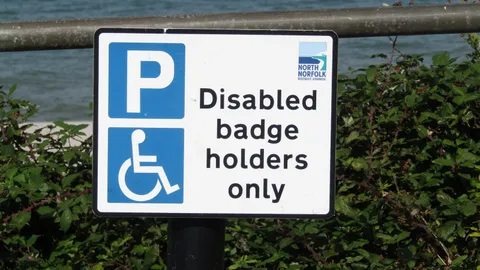
- Cover: „-2018-09-06 Disabled parking sign, East Cliff car park, Sheringham”, author: Kolforn, licence CC BY-SA 4.0; cropped or resized.
Tags
Share with friends